Wedding Day Emergencies Every Bridal Party Should Know
Weddings bring fainting, allergic reactions, choking at dinner, blisters, cuts and the occasional cardiac emergency among older guests. A bridal party with one or two people trained in first aid and CPR can handle them calmly. Hands-on courses from providers like Coast2Coast First Aid & Aquatics take a day or two.
You’ve planned the dress, the flowers, the seating chart and the playlist. You’ve probably even planned for rain.
But have you planned for Uncle Frank choking on the steak course? Or a flower girl stung by a bee during photos? Weddings are joyful, emotional and long. That combination makes small emergencies surprisingly common.
Why Do Weddings See So Many Minor Emergencies?
Think about what happens on a typical wedding day. People wake up early, skip breakfast, stand in tight shoes for hours, cry, dance, eat rich food and drink champagne in the sun.
Guests range from newborns to great-grandparents. Some have allergies, heart conditions or diabetes. Venues can be crowded, warm and far from the nearest hospital.
It’s a perfect recipe for fainting spells, sprained ankles and the occasional real emergency. The good news? Most are easy to handle if someone knows what to do.
What Should You Do If Someone Faints at the Altar?
Fainting during the ceremony is so common it’s almost a wedding tradition. Locked knees, nerves, heat and an empty stomach are the usual causes.
Prevent it: Remind the wedding party to eat breakfast, drink water and keep their knees slightly bent while standing.
If someone feels faint: Help them sit or lie down. Raise their legs slightly if they’re lying flat.
If they faint: Lay them on their back, check that they’re breathing and give them a minute to come around.
Call 911 if they don’t wake up quickly, aren’t breathing normally or hit their head.
How Should You Handle Choking at the Reception?
Dinner, speeches and laughter happen at the same time. That’s when choking risks rise.
If a guest can cough forcefully, let them keep coughing. If they can’t speak, cough or breathe, act fast: have someone call 911, then give firm back blows and abdominal thrusts until the food comes out. If the person becomes unresponsive, lower them to the floor and start CPR.
It sounds intense. It is. But trained people handle it in seconds.
What About Allergic Reactions and Bee Stings?
Outdoor ceremonies and garden photos bring bees and wasps. Catered menus bring nuts, shellfish and other allergens.
Watch for hives, swelling of the lips or face, wheezing and dizziness. If someone has an epinephrine auto-injector, help them use it and call 911. Ask your caterer to label dishes clearly, and collect guest allergy information with your RSVPs.
Which Small Injuries Should the Bridal Party Be Ready For?
Not every emergency is dramatic. These are far more common:
Blisters from new shoes
Cuts from broken glasses or cake knives
Burns from candles or curling irons
Sprained ankles on the dance floor
Heat exhaustion at summer ceremonies
Nosebleeds from dry air and stress
What Belongs in a Wedding Day Emergency Kit?
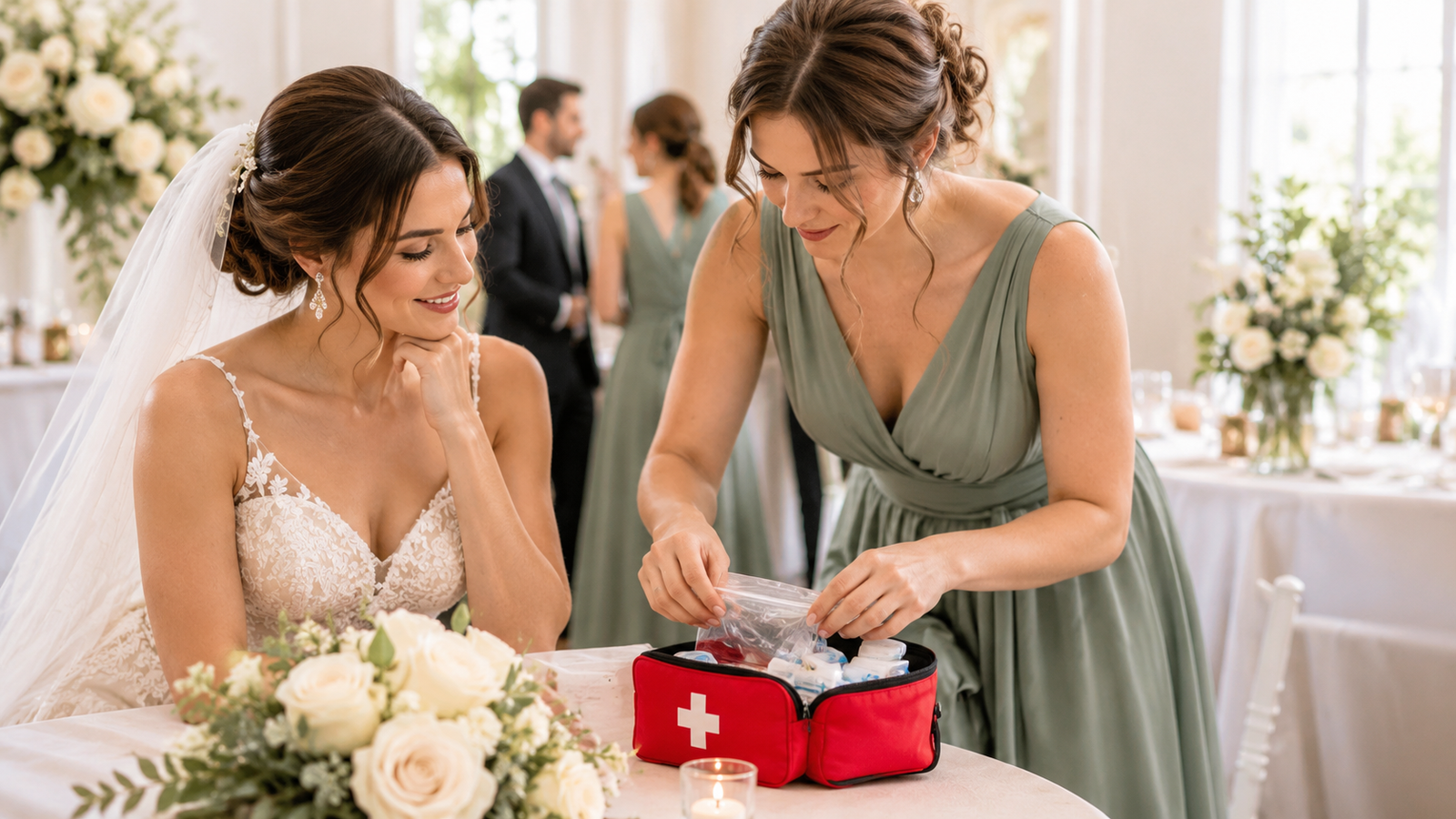
Every bridal party needs one. Pack it in a pretty pouch if you like:
Bandages and blister pads
Gauze and medical tape
Antiseptic wipes
Pain relievers for the wedding party (adults only, and only their own choice)
An instant cold pack
Safety pins, a sewing kit and fashion tape
Water bottles and snacks
Disposable gloves and a CPR face shield
Give the kit to the maid of honour or best man, and tell them where the venue’s AED is kept.
Should Someone in the Wedding Party Know CPR?
Yes. It’s one of the most loving gifts you can give your guests. Older relatives are at higher risk of heart problems, and long, emotional days can add stress.
If someone’s heart stops, every minute without CPR lowers their chance of survival. A bridesmaid or groomsman who starts compressions right away, and uses an AED if the venue has one, can keep them alive until paramedics arrive.
A CPR Level C or first aid course takes one or two days, and certificates are valid for three years. Many courses use blended learning, with theory online and a shorter hands-on session. Some couples book a private group session for the whole wedding party, which turns into a fun pre-wedding activity.
Who Should Handle Emergencies at the Venue?
On the wedding day, the couple shouldn’t be managing emergencies. Assign a point person ahead of time, ideally someone trained in first aid who isn’t giving a speech or walking down the aisle.
Share that person’s name with the venue coordinator, planner and DJ. If something happens, everyone knows who to find. The DJ can calmly ask guests to clear space, and the coordinator can direct paramedics to the right door.
Also confirm the venue’s exact address and entrance for emergency services, especially at large estates or outdoor sites with several buildings.
Your Wedding Day Safety Checklist
Someone in the wedding party trained in first aid and CPR
Emergency kit packed and assigned to a person
Venue’s AED location confirmed
Guest allergies collected with RSVPs
Water and snacks ready for the wedding party
If you are looking for first aid training near Highway 7 and Weston Road, Woodbridge, Vellore, or other areas close to our facility, then you may reach out to Coast2Coast First Aid/CPR – Vaughan in that area. Its courses are WSIB approved, and couples and families can look into CPR training for your family before the big day.
Frequently Asked Questions
Who in the wedding party should take first aid training?
The maid of honour, best man or a calm, reliable family member are great choices. More than one trained person is even better.
Do wedding venues have AEDs?
Many do, but not all. Ask your venue coordinator where it’s kept and whether staff are trained.
Can we book a group first aid class for the wedding party?
Many training providers offer private group sessions, often for eight or more people.
How long does a CPR course take?
A CPR/AED Level C course takes part of a day. A full first aid course with CPR takes one to two days.
What’s the most common wedding day medical issue?
Fainting is one of the most common, usually from heat, nerves, locked knees or skipped meals.