InSnoop: Features, Privacy, Safety, and How It Works
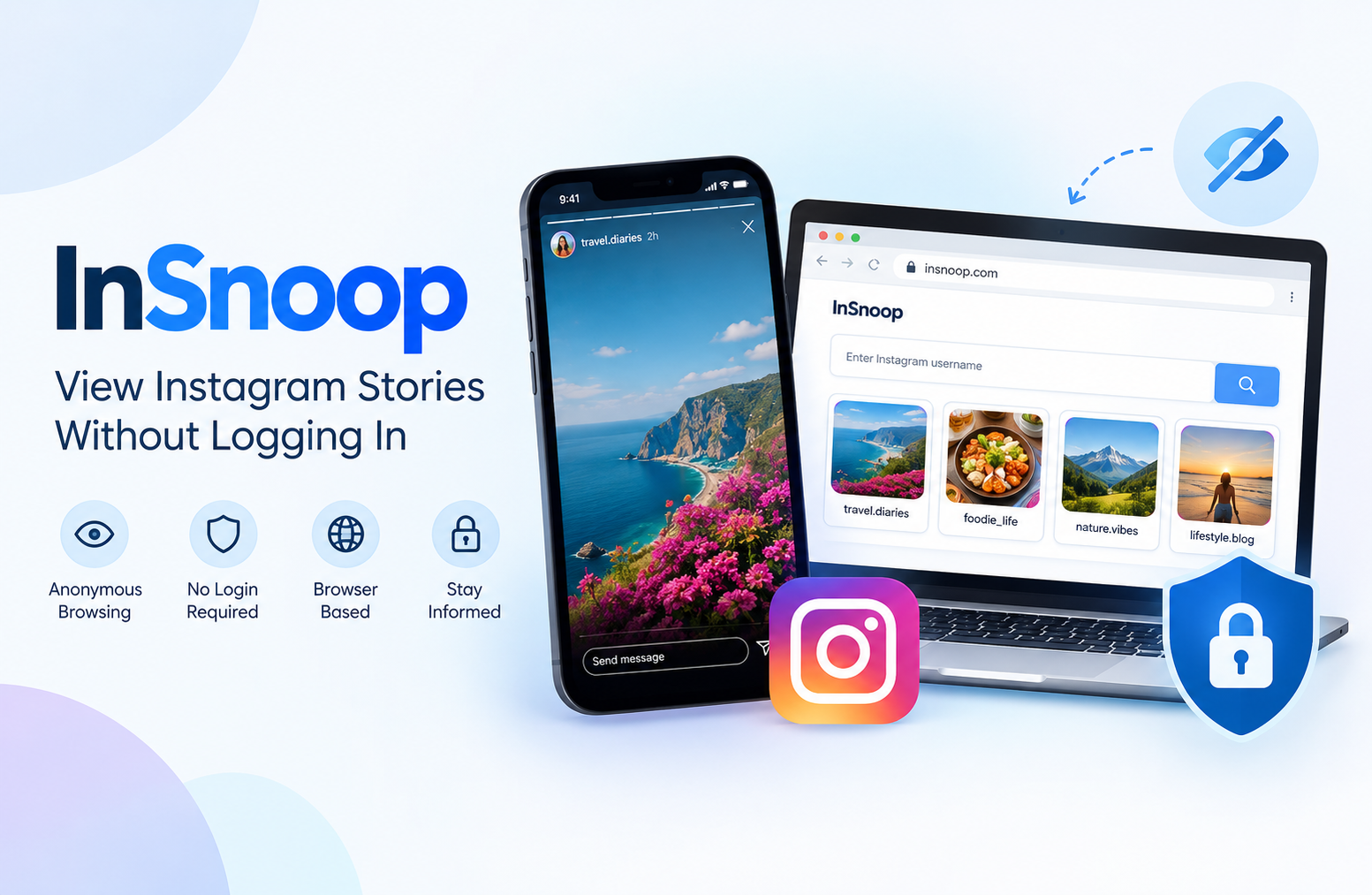
When people search for InSnoop, they are usually looking for a simple way to view public Instagram Stories without logging into their own Instagram account. The tool has attracted attention because it promises a more private browsing experience, especially for users who want to explore publicly available social media content without appearing in a Story viewer list. However, before using it, it is important to understand what the service offers, how its limitations affect the experience, and whether its privacy claims can be trusted.
InSnoop is commonly described as a browser-based Instagram Story viewer that lets users search for public profiles and access available Stories without installing a dedicated application. Its appeal comes from convenience: users can try the service through a web browser rather than creating another social media account. Nevertheless, convenience and anonymity are not the same thing. A third-party website may reduce the need to interact directly with Instagram, but that does not automatically make every part of the browsing process private, secure, or reliable.
This guide explains how the service works, what users should expect from it, how to evaluate its safety, and which alternatives make sense for different needs. It also examines common misunderstandings about anonymous Story viewing, privacy restrictions, downloads, and the risks associated with unofficial online tools.
What Is InSnoop?
InSnoop is a third-party online service associated with anonymous Instagram Story viewing. It is designed primarily for people who want to access Stories from public Instagram accounts without signing into Instagram through the viewing website.
Unlike a traditional social media application, a browser-based viewer does not necessarily require users to create an account or install software. The typical process involves opening the service, entering a public Instagram username, and checking whether the requested content is available.
The main idea is straightforward: users want to explore publicly accessible social media content while limiting the connection between that activity and their personal Instagram identity.
However, there is an important distinction between what a website advertises and what can be independently verified. Claims about anonymous viewing, content availability, download features, and data protection should not automatically be treated as guarantees.
The service’s performance may also change over time. Instagram can modify its systems, restrict automated access, or change how public content is delivered. As a result, a third-party viewer that works during one session may return errors or incomplete results during another.
The Main Purpose of the Service
The central purpose of InSnoop is to provide an alternative way to access certain publicly available Instagram Stories.
Potential uses include:
- Viewing public creator Stories without signing into a personal Instagram account.
- Exploring public social media content through a browser.
- Checking whether a public profile has accessible Story content.
- Avoiding the installation of an additional mobile application.
- Keeping casual browsing separate from a personal social media session.
These uses depend on the service’s current functionality and the availability of the requested content. They should not be interpreted as evidence that the website can access every Instagram profile or guarantee complete anonymity.
Who Might Find It Useful?
The service may appeal to casual social media users, researchers exploring public online content, and marketers interested in understanding the visible activity of public creators.
For example, a small business owner might want to review the public Stories of competing brands to understand how they announce new products. A content researcher might examine how public creators communicate events or share updates. Someone without an Instagram account might simply want to see whether a public profile has recent Story content.
In these situations, the usefulness of the tool depends on whether the information is publicly available and whether the website can retrieve it successfully.
People who need dependable analytics, long-term monitoring, detailed performance reports, or access to private information should consider more appropriate solutions.
How Does InSnoop Work?
A browser-based Instagram viewer generally accepts a username or profile reference and attempts to retrieve content that its system can access. The user then sees whatever results the service makes available.
The exact technical implementation of InSnoop should not be assumed without verified documentation from its operator. Third-party viewers can use different methods, and the internal systems of an individual service may not be publicly documented.
Understanding the general process nevertheless helps explain why these tools sometimes work and sometimes fail.
Step 1: Open the Website
The first step is to visit the intended service through a browser. Before proceeding, check the domain carefully because websites with similar names may be operated by different parties.
Do not assume that every domain containing the word InSnoop is affiliated with the same operator. Search results, copied branding, and unofficial pages can make it difficult to distinguish between services.
Avoid downloading unknown applications or browser extensions simply because a page claims that an installation is necessary.
Step 2: Enter a Public Username
The usual workflow involves entering the username of the Instagram account whose public content you want to explore.
A correct username matters because even a minor spelling error can lead to an unsuccessful search. If the website accepts profile URLs, follow its stated instructions rather than submitting unrelated personal information.
A legitimate need to view public content should not require you to provide your Instagram password to an unfamiliar third-party service.
Step 3: Check the Available Results
If the service can retrieve the requested information, it may display available Stories or other supported material. The exact features depend on the website’s current capabilities.
Results may be incomplete, delayed, or unavailable. An error does not necessarily mean that the account is private or that the username is incorrect. The website may be experiencing a technical problem, or Instagram may have restricted the access method it relies on.
Step 4: View Content Without Assuming Complete Anonymity
The primary attraction is that the user does not need to sign in to Instagram through the third-party viewer. This may prevent the viewing session from being directly associated with the user’s own Instagram account in the ordinary way.
However, that is not the same as being invisible online.
The website operator may still receive technical information associated with a visit, such as an IP address, browser information, and usage data, depending on its infrastructure and privacy practices. Advertising partners and other embedded services may also process information.
Consequently, users should distinguish between avoiding an Instagram Story viewer entry under certain conditions and concealing all traces of their online activity.
Key Features and Potential Benefits
The appeal of InSnoop comes from its focused purpose and relatively simple browser-based approach. Rather than offering a full social media management dashboard, it is associated with a narrower use case: accessing available public Story content.
1. Browser-Based Access
A web-based tool can be convenient because users do not necessarily need to install a separate application. It may be accessible from a desktop computer, laptop, tablet, or smartphone with a compatible browser.
This reduces the setup involved in trying the service. It also avoids the need to grant an additional mobile application permissions that may be unrelated to the user’s purpose.
Still, browser compatibility and website performance can vary. A responsive website is not automatically a secure website, and the absence of an installation does not eliminate privacy risks.
2. No Instagram Login Required for the Basic Workflow
One of the most appealing aspects of the service is its advertised ability to work without requiring an Instagram login.
This matters because entering social media credentials into an unfamiliar website creates a serious security concern. A website that asks users to submit their Instagram password should be treated cautiously, especially if there is no clear reason for that request.
If a viewer can be used without credentials, users avoid directly handing their password to that service. They should still avoid sharing personal information and should never enter recovery codes, authentication codes, or session cookies into unofficial websites.
3. Access to Public Stories
Public Stories are the main content type associated with this category of tool. Depending on current functionality, a service may retrieve Stories that remain available and accessible through its systems.
Availability is not guaranteed. Stories are temporary, content may be removed, and technical restrictions can prevent retrieval even when a profile is publicly visible.
Users should also remember that public availability does not remove the original creator’s rights or make every reuse of the material appropriate.
4. Potential Convenience for Casual Research
People studying public social media communication may find browser-based access convenient for occasional checks.
For instance, a marketing student might review how public businesses announce seasonal offers. A creator could examine the public communication style of similar accounts. A researcher might compare the types of updates different organizations publish.
For recurring professional work, however, informal browsing is not a substitute for a documented research method, approved data access, or a reliable analytics platform.
5. A Simple Alternative to Installing Another App
Some users prefer not to install a separate application for a task they perform only occasionally. A browser-based option can reduce software clutter and make access easier across devices.
The trade-off is that users depend on the website’s operator, technical availability, advertising environment, and data-handling practices. Convenience should therefore be evaluated alongside trust and reliability.
Is InSnoop Safe to Use?
Safety is not a simple yes-or-no question. A service may avoid asking for a password while still presenting privacy, advertising, or reliability concerns.
The sensible approach is to evaluate several separate risks rather than relying on a website’s own claims.
Account Security
The first consideration is whether the service asks for Instagram credentials.
If the website does not require a login, users do not have to disclose their Instagram password to complete its basic workflow. This removes one significant risk associated with unofficial social media tools.
Nevertheless, users should leave immediately if a page unexpectedly asks them to sign in, provide a verification code, or install an unknown file. A third-party Story viewer does not need your account recovery codes to display publicly accessible information.
If you have already submitted your password to a suspicious website, change it through Instagram’s official application or website, review active sessions, and enable two-factor authentication.
Privacy and Data Collection
The second consideration is what information the website itself collects.
A service can receive technical information when someone visits, even when no account is created. Depending on its configuration, this may include connection information, browser characteristics, cookies, and interaction records.
The important question is whether the operator explains what it collects, why it collects it, how long it retains the information, and whether it shares that information with third parties.
If the privacy policy is missing, unclear, or difficult to verify, users cannot confidently determine how their browsing activity will be handled.
It is therefore inaccurate to assume that a website collects no information simply because it does not request an email address or password.
Advertisements and Redirects
Free websites may rely on advertising to cover operating costs. Advertising itself does not prove that a website is malicious, but aggressive advertising can make a service harder to use safely.
Be cautious if a page:
- Opens unexpected tabs or redirects you to unrelated websites.
- Displays fake virus warnings or urgent security messages.
- Claims that your device is infected and demands immediate action.
- Uses misleading download buttons.
- Requests payment details for a supposedly free feature without explaining the charge.
- Encourages you to install unfamiliar software or browser extensions.
Close suspicious pages rather than interacting with their prompts. Keep your browser updated, use reputable security protections, and avoid granting unnecessary permissions.
Trust and Ownership
A trustworthy service should make it reasonably clear who operates it and where users can find its privacy policy and terms.
When ownership information is difficult to verify, the operator’s accountability is uncertain. This does not prove that the website is fraudulent, but it limits the evidence available to support claims about safety.
Users should also distinguish a website’s HTTPS connection from a guarantee of trustworthiness. HTTPS helps protect information while it travels between a browser and a website. It does not independently verify the operator’s identity, business practices, or intentions.
Anonymity Is Not Guaranteed
The most important safety consideration is the distinction between reducing account-linked visibility and guaranteeing anonymity.
A third-party viewer may allow a user to browse public content without directly using their own Instagram account. However, its exact technical behavior may be undocumented, and access methods can change.
The service may also experience failures, use third-party infrastructure, or process information in ways that are not transparent to visitors.
For these reasons, treat anonymous viewing as a claimed feature that requires caution, not as a promise of absolute invisibility. Avoid using it for sensitive situations in which even a small privacy failure could have serious consequences.
Can InSnoop View Private Instagram Accounts?
No reliable third-party viewer should be assumed capable of accessing private Instagram content without authorization. InSnoop is associated with public Story viewing, and there is no sound reason to treat it as a legitimate way to bypass Instagram’s privacy settings.
When an Instagram account is private, the account owner controls who can follow the profile and access its restricted content. A website cannot legitimately promise access to private Stories simply because someone enters a username.
Why Private Profiles Are Different
Public and private accounts have different access rules.
A public profile generally makes eligible content visible to a broader audience, subject to Instagram’s features and restrictions. A private profile limits access to approved followers for content covered by its privacy settings.
This distinction also matters for Stories. Content shared with a restricted audience, including Close Friends, should not be assumed to be accessible through an anonymous viewing service.
If a website claims it can reveal private Stories, hidden messages, private followers, or restricted photographs without authorization, treat that claim as a serious warning sign.
What to Do If a Private Profile Cannot Be Viewed
There are several reasonable options:
- Send a follow request through Instagram if you have a legitimate reason to see the content.
- Wait for the account owner to share the information publicly.
- Ask the owner directly for the material you need.
- Use publicly available information when your purpose is research or professional analysis.
These options respect the account owner’s choices and avoid exposing you to services that use unrealistic promises to attract visitors.
Does InSnoop Really Let You View Stories Anonymously?
This is the central question for many prospective users. The answer requires a distinction between how a viewer is designed to work and what can be guaranteed in practice.
A service that does not ask for your Instagram login may allow you to view supported public content without connecting the viewing action to your personal account in the usual way. However, the exact result depends on how the service retrieves and delivers the content.
Without independently verified technical documentation and repeatable testing, it would be misleading to promise that every Story view is completely anonymous.
Three Different Types of Privacy
Understanding privacy in this context becomes easier when it is divided into three categories.
Identity privacy: Whether the Instagram account owner can see your personal Instagram username in the Story viewer list.
Website privacy: Whether the third-party service can collect information about your visit, searches, or device.
Network privacy: Whether your internet connection and browsing activity are visible to relevant network providers or other parties with access to that information.
These categories are not interchangeable. A tool might reduce the chance that your Instagram username appears in a viewer list without concealing your IP address from the website you visit.
A private browsing window does not solve every problem either. It mainly limits certain forms of local browsing history and session persistence. It does not automatically hide your network identity from the websites you access.
Why Anonymous Viewing Can Fail
Third-party Story viewers depend on systems that may be outside their control. If Instagram changes its access restrictions, the service may stop retrieving content or return incomplete results.
Other possible explanations include temporary server problems, delayed content availability, an incorrect username, or a Story that is no longer available.
A successful search also does not independently prove that every privacy claim made by the website is accurate. A user may see the expected content without having any way to inspect the website’s internal data handling.
The most responsible conclusion is that anonymity cannot be guaranteed simply because a service advertises it.
How to Use InSnoop More Carefully
Anyone considering InSnoop should evaluate the website before entering a username or interacting with its content. The following steps help reduce avoidable risks.
Step 1: Verify the Domain
Check the spelling of the website address before opening it. Search for the operator’s official information and do not assume that websites with similar names share the same ownership.
Avoid clicking unfamiliar links from unsolicited messages, social media comments, or suspicious advertisements.
Step 2: Read the Privacy Information
Look for a privacy policy that explains data collection, retention, cookies, and third-party sharing.
Pay attention to whether the operator identifies the information it collects and provides a way to contact the service.
If the website does not provide enough information to assess its data practices, consider whether the convenience is worth the uncertainty.
Step 3: Never Share Your Instagram Password
A public Story viewer should not need your Instagram password merely to search for a public username.
Do not provide passwords, authentication codes, backup codes, or session cookies. These details can be used to compromise an account.
If a page suddenly requests credentials, stop rather than assuming the request is a normal part of the process.
Step 4: Avoid Unnecessary Downloads
A browser-based service should not automatically require you to download an application, executable file, or unknown extension.
If the website recommends an extension, investigate its developer, permissions, privacy policy, and reputation before considering installation.
An extension that can read or change information on websites may have broader access than you expect. Only install software from sources you trust and only grant permissions that are necessary.
Step 5: Treat Unexpected Results Cautiously
If the site displays an error, do not respond by entering personal information into another website that promises instant access.
Check the username, confirm that the account is public, and consider whether the Story is still available. A temporary error may simply mean the service cannot retrieve the content.
Avoid tools that demand surveys, payment information, or unusual permissions to unlock supposedly private material.
Step 6: Respect Content Ownership
Publicly viewable material is not automatically free to republish, edit, or use commercially.
If you intend to reuse a creator’s photographs, videos, or other original material, consider copyright, permission, platform rules, and the context in which the material was shared.
Viewing a public Story for personal interest is different from downloading and distributing it without permission.
Common Reasons InSnoop May Not Work
A failed search can be frustrating, especially when a website presents itself as a straightforward tool. However, several explanations are possible, and not every failure indicates a problem with the user’s device.
The Website Is Temporarily Unavailable
Like other online services, a third-party viewer can experience server outages, maintenance, or technical errors.
If the website does not load, avoid downloading replacement software from an unfamiliar source. You can check again later or use Instagram directly if you need dependable access to public content.
Instagram Has Changed Its Systems
Third-party viewers may rely on methods that are not officially supported by Instagram. Platform updates and access restrictions can disrupt those methods.
This is one reason the reliability of such services can change without warning. A website that worked yesterday may return an error today.
The Account Is Private
If the profile is private, the service may be unable to retrieve its content.
Trying multiple similar websites will not turn restricted content into publicly accessible information. Claims that a tool can unlock private profiles should be treated with skepticism.
The Story Has Expired or Been Removed
Instagram Stories are temporary content, and availability depends on the creator’s settings and actions. A Story that has expired or been removed may no longer be accessible through the service.
Do not assume that every profile search will return an active Story.
The Username Is Incorrect
A misspelled username, changed handle, or outdated profile link can prevent a successful search.
Double-check the public profile information before concluding that the service itself is malfunctioning.
The Service Has Limited Functionality
Some websites advertise more features than they reliably provide. A service may support only certain content types or fail to retrieve material consistently.
Evaluate each feature independently rather than assuming that a tool can view Stories, download videos, display Highlights, and provide analytics just because those features appear in a promotional description.
InSnoop vs. Other Ways to View Instagram Content
Choosing an appropriate viewing method depends on the task. Someone checking a friend’s public update has different needs from a business measuring campaign performance or a researcher documenting social media activity.
| Method | Main advantage | Main limitation |
| InSnoop | Browser-based access to supported public Stories | Privacy and reliability are not guaranteed |
| Instagram website | Direct access to eligible Instagram content | Viewing Stories while logged in may identify the viewer |
| Instagram mobile app | Familiar interface and direct account access | Requires an Instagram account for account-based features |
| Professional social media analytics | Useful reporting for supported accounts and connected profiles | Features may require authorization or a paid plan |
| Direct permission from the owner | Clear, authorized access to restricted material | Depends on the owner’s response |
InSnoop vs. Instagram’s Official Website
Instagram’s own website is generally the more direct option for browsing eligible public profiles. It avoids the uncertainty of relying on an unrelated viewer to retrieve content.
However, if you view a Story while signed into Instagram, you should not assume your viewing activity will remain hidden from the account owner.
The official service is more appropriate when you need dependable access to your own account, manage interactions, or use features that require authentication.
InSnoop vs. the Instagram App
The mobile app offers Instagram’s standard features and account controls. It is the natural choice for users who want to interact with content, follow accounts, respond to Stories, or manage their own profile.
A third-party viewer may appeal to users who prefer a browser-based workflow, but it cannot be assumed to provide the same reliability, access, or protections as the official app.
InSnoop vs. Professional Analytics Tools
Businesses and creators often need more than occasional Story viewing. They may need campaign reporting, engagement metrics, content planning, or comparisons across authorized accounts.
Professional tools are better suited to these tasks when they provide the required features and use permitted data access methods.
An anonymous Story viewer should not be confused with an analytics platform. Viewing content does not necessarily provide verified audience demographics, reliable engagement statistics, or historical performance data.
Which Option Is Best?
For routine account management, the official Instagram service is usually the most straightforward choice. For business reporting, a reputable analytics platform with appropriate account authorization is more suitable. Also for restricted content, obtaining the owner’s permission is the appropriate approach.
InSnoop may appeal to users seeking occasional access to public Stories, but its convenience should be weighed against uncertainty about reliability, ownership, and privacy practices.
Real-World Applications and Their Limitations
The potential usefulness of InSnoop becomes clearer when considered in practical situations. The important point is to distinguish tasks that involve publicly available information from those that require private access, verified analytics, or long-term monitoring.
Public Social Media Research
Researchers studying online communication may examine public posts and Stories to understand how organizations present information.
For example, a researcher might compare the themes used by several public tourism accounts during a seasonal campaign. A viewer may provide convenient access to some public content, but it should not be the sole source of evidence for a formal study.
Research involving time-sensitive material should document when the content was observed, how it was accessed, and what limitations affected collection.
Competitor Content Analysis
Small businesses sometimes study the public social media activity of competing brands.
They may want to understand how competitors announce promotions, communicate product launches, or present customer questions. Public content can provide useful qualitative examples, but a Story viewer cannot establish how successful a competitor’s campaign actually was.
A careful analysis distinguishes observable content from unsupported conclusions about reach, sales, or audience response.
Creator and Content Strategy Research
Content creators may review public accounts to identify communication styles, recurring formats, and approaches to storytelling.
For instance, someone creating educational content might study how established creators explain a complex subject through a sequence of short updates.
The value lies in understanding the content, not simply collecting copies. Original analysis should explain what was observed and why it matters rather than reproduce another creator’s work.
Casual Browsing
Some users simply want to explore public content without opening a personal Instagram session. For occasional browsing, a lightweight browser-based tool may appear convenient.
Nevertheless, the same privacy precautions apply. Do not submit sensitive information, install unknown software, or treat anonymity claims as absolute guarantees.
What It Cannot Reliably Replace
InSnoop should not be treated as a dependable replacement for:
- Authorized access to private Instagram profiles.
- Official account management and security features.
- Verified audience analytics.
- A permanent archive of every Story.
- Comprehensive monitoring of an account’s activity.
- Proof of who has viewed your own profile.
- Evidence of another person’s private behavior or intentions.
Understanding these limits helps prevent wasted time and unrealistic expectations.
Privacy Best Practices for Anonymous Instagram Viewing
Users who care about privacy should focus on reducing unnecessary exposure rather than relying on a single website’s anonymity claims.
Use Official Sources for Account Security
When you need to check your Instagram password, review login activity, or manage account protections, use Instagram’s official services. The Instagram Help Center provides guidance on account security, privacy settings, and managing your account.
This is particularly important if you suspect that you have entered credentials on an unfamiliar website.
Keep Your Browser and Device Updated
Browser updates help address known security weaknesses. Use a supported browser, keep your operating system current, and enable the security features that are appropriate for your device.
Avoid ignoring repeated security warnings just to access a website.
Minimize the Information You Share
Do not submit personal details that are unnecessary for viewing public content. Avoid using third-party services that request your phone number, email address, password, or payment information without a clear and legitimate explanation.
Even a username search can reveal information about your interests to a website operator, depending on how its systems are configured.
Understand the Limits of Private Browsing
Private or incognito mode can help prevent some browsing history and session data from being saved locally after the session ends. It does not make you invisible to websites, internet service providers, or every third-party service involved in loading a page.
It is a useful browser feature, but it should not be confused with complete online anonymity.
Avoid Services That Promise Impossible Access
Be particularly cautious about claims involving private Stories, hidden messages, secret profile viewers, or lists of people who have visited your Instagram profile.
These claims should not be trusted without credible evidence. Do not pay a fee or share sensitive details to unlock features that a third-party website cannot reasonably demonstrate.
Common Misconceptions About InSnoop
Several misconceptions can lead users to misunderstand what the service can do.
Myth 1: No Login Means Complete Privacy
Not requiring an Instagram login reduces the need to share account credentials, but it does not mean the website cannot collect technical information about visitors.
Account privacy and website privacy are separate concerns.
Myth 2: Every Instagram Profile Can Be Viewed
Public content may be accessible, but private accounts have restrictions. No responsible assessment should promise universal access to Stories, photographs, or videos.
Myth 3: A Successful Search Proves the Website Is Safe
A website can return the expected result while still having unclear privacy practices. Functionality does not establish the trustworthiness of its operator.
Security assessments should consider ownership, permissions, data collection, advertising behavior, and available documentation.
Myth 4: Anonymous Viewers Can Reveal Who Visited Your Profile
Viewing public Stories and identifying every visitor to an Instagram profile are different tasks. A third-party viewer should not be assumed capable of revealing a complete list of profile visitors.
Be skeptical of services that promise to expose hidden profile visits or secret viewers.
Myth 5: Downloaded Content Can Be Used Without Restrictions
The ability to save a file does not automatically grant permission to republish it. Copyright, privacy, and platform rules may still apply.
If you intend to use another person’s content in a commercial project, obtain appropriate permission and verify the relevant rights.
How to Evaluate an Anonymous Instagram Viewer
Rather than relying on promotional claims, use a consistent evaluation process whenever you encounter a third-party viewer.
Check the Operator’s Transparency
Look for a clearly identified operator, a working privacy policy, understandable terms, and a legitimate way to raise questions or report a problem.
Missing information does not automatically establish fraud, but it makes it harder to assess the service.
Separate Features From Promises
A feature is something the service demonstrably provides under defined conditions. A promise is a claim that may not have been independently verified.
For example, a website might offer a username search field. That does not prove it can retrieve every Story, remain available continuously, or guarantee that no information about the visitor is collected.
Examine Independent Evidence Carefully
Reviews can provide useful information about usability, loading errors, advertising, and limitations. However, individual reports may be outdated or based on different domains and testing conditions.
A review that describes one successful session does not establish that the service will work reliably for everyone.
Look for transparent testing methods, clear dates, and evidence that distinguishes observed results from assumptions.
Consider the Cost of Failure
The appropriate level of caution depends on what could happen if the tool fails.
For casual browsing, an unsuccessful search may simply waste a few minutes. In a sensitive situation, a privacy failure could have more serious consequences.
If anonymity is essential, do not rely on an unverified service as your only protection.
Review the Need for the Tool
Finally, ask whether a third-party viewer is necessary at all.
If your objective is to manage your own account, use the official platform. If you need public information for research, consider whether direct access or a documented collection method is more reliable. Also if you need private material, request permission.
A tool is most useful when its capabilities match the task and its limitations are understood in advance.
The Future of Anonymous Instagram Story Viewers
The continued interest in anonymous viewers reflects a broader tension between convenience, privacy, and social media visibility.
Some users want to browse public information without connecting every activity to their personal accounts. At the same time, platforms have reasons to control automated access, protect restricted content, and maintain their technical systems.
These competing interests help explain why third-party viewers can be unpredictable.
Platform Changes Can Affect Reliability
Services that depend on unofficial access methods may be vulnerable to changes in platform infrastructure. Even a small technical change can affect content retrieval, loading times, or the range of available features.
This makes long-term reliability difficult to guarantee.
Privacy Expectations Are Changing
People are becoming more aware that websites can collect information even when they do not require registration. The absence of a login form does not remove every privacy concern.
For third-party tools to earn greater trust, transparent policies and clear explanations of data practices are important.
Convenience Will Remain Important
Browser-based services offer a low-friction experience that can appeal to casual users. However, convenience alone is not enough to establish safety, technical quality, or responsible data handling.
The strongest evaluation considers all three: what a service does, what information it may process, and what happens when it fails.
Responsible Use Matters
The future of social media tools will also depend on how people use them. Public information can support learning, research, and professional analysis, but access should not be confused with permission to invade privacy or misuse content.
A responsible user understands the difference between exploring publicly available information and attempting to circumvent another person’s privacy choices.
Frequently Asked Questions (FAQs)
1. What is InSnoop used for?
InSnoop is a third-party online tool associated with viewing publicly available Instagram Stories without logging into Instagram through the viewing website. Its availability and supported features may change.
2. Is InSnoop free to use?
The service is commonly described as a free browser-based viewer. However, its current pricing, advertising practices, and available features should be checked on the specific website before use.
3. Can InSnoop view private Instagram accounts?
You should not expect InSnoop or another third-party viewer to provide authorized access to private Instagram content. Private profiles restrict access to approved followers, and claims of bypassing those restrictions are a warning sign.
4. Does InSnoop guarantee anonymous Story viewing?
No absolute guarantee should be assumed. A viewer may allow browsing without directly using your personal Instagram account, but its technical methods and data practices may not be independently verified.
5. Is InSnoop safe to use?
Its safety cannot be established solely by its advertised features. Check the website’s domain, privacy policy, ownership information, and behavior. Never provide your Instagram password, authentication codes, or other sensitive credentials to an unfamiliar viewer.
6. Why is InSnoop not loading Stories?
Possible reasons include temporary server problems, platform access restrictions, an incorrect username, expired Stories, or limited service functionality. A failed search does not necessarily mean that the account is private.
Conclusion
InSnoop is a browser-based tool associated with viewing public Instagram Stories without signing into Instagram through the viewer itself. Its main appeal is convenience, particularly for people who want to explore public content without installing another application or connecting their personal Instagram account to the viewing process.
However, its practical value depends on more than ease of use. Website availability, content restrictions, privacy practices, and the reliability of its anonymous viewing claims all deserve consideration. Users should not assume that the service can access private accounts, reveal hidden profile visitors, or guarantee complete anonymity.
The most important distinction is between accessing public content without a personal Instagram login and remaining completely invisible online. These are not the same thing. A third-party website may still process technical information about a visit, and its internal practices may not be independently verifiable.
Anyone considering InSnoop should verify the domain, review the available privacy information, avoid sharing sensitive credentials, and remain cautious about unexpected downloads or redirects. For routine account management and security, Instagram’s official services remain the more appropriate choice. For professional research and analytics, a reputable tool with suitable authorization and transparent data practices may offer greater reliability.
Ultimately, InSnoop is best understood as a limited third-party viewing option rather than a guaranteed privacy solution. Understanding its purpose, limitations, and potential risks allows users to make more informed decisions about accessing public social media content.