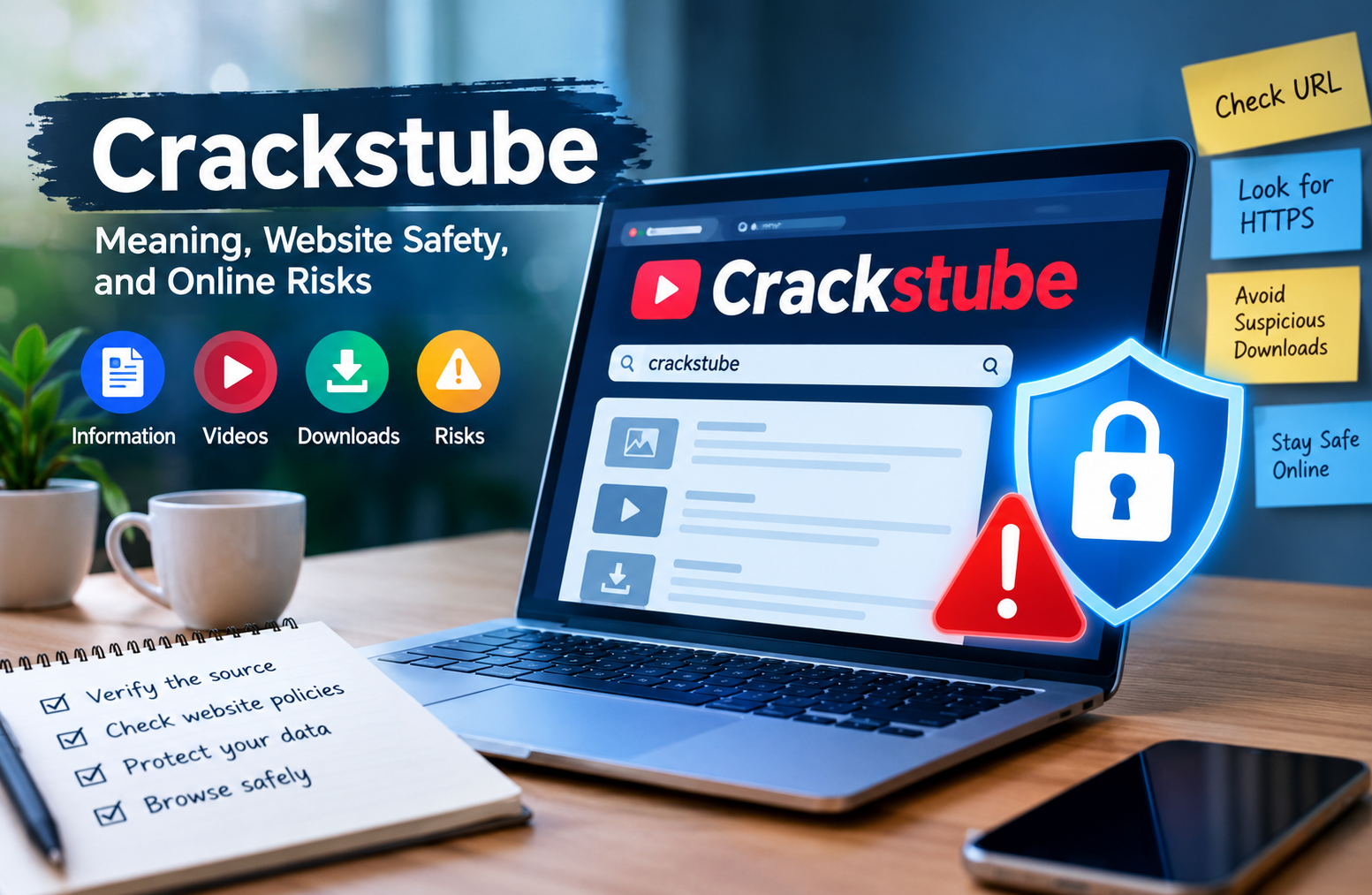
Crackstube: Meaning, Website Safety, and Online Risks
The keyword crackstube can lead to different types of websites and online content, which makes it important to understand what the name refers to before visiting a page. Some websites using this name present themselves as digital publishing platforms, while other online references associate similar names with video content, modified software, or unofficial downloads. These uses should not automatically be treated as the same service. Understanding the exact website, its purpose, its privacy practices, and the risks associated with unfamiliar online platforms helps readers make informed decisions.
What Is Crackstube?
Crackstube is a search term that does not point to one universally established service across every online reference. Its meaning depends on the particular website, domain, or context in which it appears.
For example, public search results describe Crackstube-related websites in different ways. Some present a general publishing platform that shares informational articles on technology, business, education, and other subjects. Other pages use similar terminology when discussing unofficial media websites or software downloads. These descriptions do not establish that the websites share an owner or operate in the same way.
The Facts Behind the Domain
+1
This distinction matters because the name alone cannot confirm what a website offers. A publishing website, a video platform, and a software download page have different purposes and may present very different security concerns.
Before deciding whether a particular website is useful or trustworthy, readers should examine its exact web address and the content it actually provides.
Why Is Crackstube a Confusing Search Term?
The confusion surrounding this keyword comes from the way similar names can appear across unrelated websites.
The meaning of the name
The word “crack” is often associated with software modifications that bypass licensing or activation controls. The word “tube” is frequently used in names associated with online video and media.
When combined, these words may lead people to expect a website offering free videos, modified applications, or downloadable files. However, a name can create an expectation without accurately describing the website behind it.
Different websites can use similar names
A website using a particular keyword does not automatically own every other domain containing the same word. Independent website operators can use similar names while publishing entirely different material.
For this reason, readers should distinguish between:
- Informational websites: Platforms that publish articles, guides, explanations, and educational content.
- Media websites: Services that host or distribute video and other forms of digital media.
- Software download websites: Pages offering applications, installers, or modified software.
- Unofficial content sources: Websites that may distribute copyrighted material without authorization or offer files with unclear origins.
These categories are general descriptions, not a claim that every website using the name belongs to one of them. The exact domain must be checked before drawing conclusions.
How Does Crackstube Work?
The answer depends on which website a person is visiting. There is no single verified process that can be attributed to every website using this name.
If the domain is an informational publishing platform, visitors may browse articles, read explanations, explore categories, and follow links to related topics. Such a website works much like a conventional online magazine or knowledge resource.
If the domain offers downloads or streaming, the experience may be different. Visitors might encounter video players, download links, advertising, account registration, or requests to install additional software. These features should be evaluated individually rather than assumed to be safe simply because they appear on a familiar-looking page.
Understanding a publishing platform
A conventional publishing website generally organizes content into categories. Each article addresses a subject, answers questions, or provides information that readers can use.
Readers may benefit from this format when they want to learn about unfamiliar terminology, understand a digital trend, or find an explanation without navigating several separate resources.
A reliable publication should also make it reasonably easy to identify its purpose, contact its operator, review its policies, and understand who is responsible for its content.
Understanding a download or streaming website
Websites that provide software or media require additional scrutiny, particularly when the source is unfamiliar.
A legitimate download page should identify the software, its publisher, its licensing terms, and the origin of the file. A trustworthy streaming service should explain its content rights and provide clear information about its terms and privacy practices.
Warning signs include unexpected installers, repeated redirects, fake download buttons, browser notifications that appear without a clear explanation, and requests to disable security protections.
The practical lesson is simple: website features should be assessed according to what they actually do, not according to the name displayed at the top of the page.
Main Features Readers May Encounter
Because the keyword covers different online contexts, the following features should be understood as general possibilities rather than confirmed features of every site associated with the name.
1. Online information and articles
An informational website may publish material on technology, business, education, entertainment, or lifestyle topics. This type of content can help readers develop a basic understanding of a subject before exploring more specialized sources.
The quality of that information depends on the research, accuracy, editorial standards, and freshness of individual articles.
2. Searchable content
Some websites organize material through categories, menus, and search tools. These features help readers locate specific information without manually browsing every page.
A useful search experience should return relevant results and make it clear when information is unavailable.
3. Media access
A website associated with video content may offer embedded players or links to media hosted elsewhere. However, the presence of a video player does not establish that the content is legally distributed or that the surrounding advertisements are safe.
Readers should look for identifiable publishers, clear content policies, and reputable sources.
4. Download links
Some sites using similar terminology may advertise downloadable programs or files. Downloads can be convenient, but they also create risks when the source and integrity of a file cannot be verified.
Files from official developers and recognized application stores are generally preferable to unknown installers advertised through pop-ups or shortened links.
5. Advertising and external links
Online publications and media websites may use advertising or external links to support their operations. Not every advertisement is dangerous, but an unfamiliar site can expose visitors to misleading offers or deceptive buttons.
A reader should distinguish genuine navigation from advertising and avoid providing sensitive information to a destination that has not been verified.
Potential Benefits of Crackstube-Related Websites
The possible benefits depend on the specific platform and the content it provides. It would be inaccurate to attribute every benefit below to every website using this name.
Access to information
If the website publishes educational articles, it may help readers find introductory explanations in one place. This can be useful when researching an unfamiliar topic or trying to understand terminology.
However, convenience should not replace verification. Important information should be checked against reliable sources, particularly when it affects money, health, legal obligations, or digital security.
Convenient browsing
Websites with clear menus and readable pages can make online research easier. Good navigation allows visitors to move between topics without unnecessary confusion.
A site that relies heavily on disruptive advertising, deceptive buttons, or forced redirects provides a less useful experience, even if some of its content is informative.
Learning at an individual pace
Written guides allow readers to review explanations, return to earlier sections, and compare information at their own pace.
This can be valuable for people learning about digital tools or unfamiliar online services. The benefit depends on whether the material is accurate, understandable, and sufficiently detailed.
Discovering related topics
A well-organized publication may connect related articles so readers can explore a subject in greater depth. For example, an introductory technology article might link to material about online privacy, software licensing, or account security.
These connections are most useful when the linked material adds genuine value instead of simply repeating the original content.
Limitations to keep in mind
No website should be considered reliable solely because it has a professional design, many articles, or a recognizable name. Readers should assess the actual information and the behavior of the platform.
Similarly, a site offering something for free does not necessarily provide better value than an authorized alternative. Hidden risks, intrusive advertisements, poor file quality, or unauthorized distribution can outweigh the apparent convenience.
Is Crackstube Safe to Use?
Safety cannot be determined from the keyword alone. It depends on the exact domain, its current behavior, its operators, and the activities a visitor performs there.
A website that only displays ordinary articles presents a different set of risks from one that asks visitors to install software or enter payment details. Even a read-only page can contain deceptive advertisements or links to unsafe destinations.
A careful assessment should consider several factors.
Check the exact URL
Start by examining the complete address in the browser bar. Pay attention to the domain ending, spelling, unexpected subdomains, and unusual characters.
A page with a similar name may be unrelated to the website you intended to visit. Search results and advertisements can also lead to lookalike domains.
If you cannot establish that the address belongs to the intended service, do not enter passwords, financial information, or personal details.
Look for HTTPS
An HTTPS connection encrypts data exchanged between a browser and a website. It helps protect information in transit, but it does not prove that the website operator is honest or that the content is safe.
Fraudulent and low-quality websites can also use HTTPS. Treat the secure connection as one technical requirement, not a complete safety certificate.
Review the website’s policies
A website that collects information should explain how it handles that information. Look for a privacy policy, terms of use, and relevant contact details.
For a publishing platform, it can also be useful to review the About page and editorial policies. For a download service, check the software publisher, license, and source of each file.
Missing or vague policies do not automatically prove malicious activity, but they reduce the information available for making a sound decision.
Watch for suspicious behavior
Stop interacting with a page if it repeatedly opens new tabs, redirects you to unrelated domains, or claims that your device is infected and requires an immediate download.
Other warning signs include:
- Requests to disable antivirus or browser protections.
- Prompts to install an unknown extension before viewing content.
- Fake system warnings and urgent payment demands.
- Download buttons that trigger unrelated files.
- Requests for passwords or payment information without a clear reason.
- Unexpected notifications that continue appearing after leaving the site.
These behaviors do not establish that every page using the name is dangerous. They are reasons to stop and investigate the particular page.
Avoid unnecessary permissions
A website should not need broad access to your device simply to display an ordinary article.
Be cautious when a page asks for camera access, microphone access, location access, file access, or permission to send notifications without a clear purpose.
Decline permissions that are not necessary for the activity you intended to perform.
Security Risks Associated With Unofficial Downloads
One reason readers should investigate unfamiliar websites carefully is that modified software and unverified downloads can expose devices and accounts to serious risks.
These risks apply broadly to unknown download sources. They should not be interpreted as proof that every website associated with this keyword distributes harmful files.
Malware and unwanted programs
A file advertised as a free application may contain unwanted software or malicious code. Depending on the program, the consequences can include intrusive advertisements, browser changes, unauthorized data collection, or damage to files.
Some malicious programs are designed to remain hidden while collecting information or communicating with remote systems.
Password theft
A compromised application may attempt to capture saved credentials, browser sessions, or information entered into other programs.
If an attacker obtains access to an email account, that access can sometimes be used to reset passwords for other services. This is why using unique passwords and enabling multifactor authentication are important safeguards.
Ransomware and data loss
Certain forms of malware can encrypt files and demand payment for their recovery. Other threats may delete or damage information.
Regular backups stored separately from the main device can reduce the impact of some incidents. A backup should be tested periodically so that the owner knows the files can actually be restored.
Browser and account abuse
Some unsafe websites attempt to persuade visitors to install extensions or grant excessive permissions. A malicious extension may observe browsing activity, alter search results, or access information beyond what its advertised purpose requires.
Review installed extensions periodically and remove those that are unfamiliar or unnecessary.
Copyright and licensing problems
Software licenses and copyright laws differ by jurisdiction, but bypassing a paid application’s protections or downloading copyrighted material without authorization can create legal and contractual problems.
The safer approach is to use authorized sources, official free versions, open-source alternatives, or legitimate trials.
How to Protect Your Device While Browsing
A few practical habits can reduce exposure to online threats regardless of which website you visit.
Step 1: Keep your browser and operating system updated
Install security updates from official sources. Updates often address vulnerabilities that attackers could otherwise exploit.
Enable automatic updates when appropriate, and restart your device when necessary to complete the installation.
Step 2: Use reputable security software
Keep your device’s built-in security features enabled or use a reputable security product. Do not disable protection because an unfamiliar website claims that doing so is necessary.
If a downloaded file triggers a security warning, do not ignore it simply because the file is advertised as free or popular.
Step 3: Avoid unknown downloads
If you only want to read an article, you should not need to install a separate application or download an executable file.
When you need software, find the developer’s official website or a recognized application store. Confirm that the publisher and product match what you intended to obtain.
Step 4: Protect your accounts
Use a password manager to create unique passwords for important accounts. Enable multifactor authentication wherever it is available, especially for email, financial services, and accounts that can reset other passwords.
Never enter your primary account credentials into an unfamiliar page just to access a file or view ordinary content.
Step 5: Review browser permissions
Check which websites can send notifications or access sensitive device features. Remove permissions that are no longer needed.
If unwanted pop-ups continue after leaving a website, inspect your browser’s notification settings and installed extensions rather than clicking the pop-ups.
Step 6: Back up important information
Maintain copies of essential documents, photos, and work files. For important information, consider a backup that is disconnected from your device when not in use.
This can help limit the consequences of hardware failure, accidental deletion, or certain malware incidents.
For additional practical guidance, the US government’s consumer protection resource on online security and protecting personal information explains steps consumers can take to reduce common digital risks.
What Should You Do If You Have Already Visited a Suspicious Website?
Opening a website does not automatically mean your device has been infected. The level of risk depends on what happened during the visit.
If you only opened a page and closed it without downloading files, entering information, or granting permissions, there may be little reason for concern. Still, investigate any unexpected behavior.
If you downloaded a file
Do not open the file if you are unsure of its source. Delete it if appropriate, and use your security software to scan the device.
If you already ran the file and notice suspicious activity, disconnect the affected device from the network if you suspect an active compromise. Use a trusted device to change important passwords when necessary, and seek help from a qualified security professional if the problem persists.
If you entered a password
Change the affected password through the service’s official website or application. If you reused that password elsewhere, change it on those accounts as well.
Review recent sign-in activity, end unfamiliar sessions, and enable multifactor authentication where possible.
If you entered payment information
Contact your bank or card provider through its official contact channel. Explain what happened and ask whether the payment method needs to be blocked, replaced, or monitored.
Check your transaction history for unfamiliar charges and follow your provider’s instructions.
If you granted browser permissions
Open the browser’s settings and revoke permissions that you do not recognize or no longer need. Review recently installed extensions and remove suspicious items.
If the browser continues to redirect or display unwanted notifications, check its notification, startup, and extension settings. More extensive cleanup may be needed if unwanted software was installed.
If nothing unusual happened
Avoid assuming that your device is compromised without evidence. Keep your software updated, monitor your accounts where appropriate, and continue using normal security precautions.
A measured response is more useful than downloading random cleanup tools promoted by alarming pop-ups.
Crackstube and Legal Considerations
The legal status of online content depends on what a website provides, how the material is distributed, the applicable license, and the laws of the relevant jurisdiction.
Reading an ordinary informational article is different from downloading a modified commercial application or obtaining copyrighted media from an unauthorized source.
Software licensing
Commercial applications may restrict copying, redistribution, modification, or the removal of activation mechanisms. Bypassing those restrictions may violate the software license and could also violate applicable law.
The specific consequences depend on the circumstances and jurisdiction. Readers should not assume that a download is lawful merely because it is available without charge.
Copyrighted media
Films, television programs, music, and other creative works may be protected by copyright. A website’s availability does not establish that its operator has permission to distribute them.
Where licensing information is unclear, an authorized streaming service, broadcaster, library, or other legitimate distributor is a better starting point.
Privacy and personal information
Privacy obligations also differ by jurisdiction. Before registering with an unfamiliar platform, check what information it requests, why it needs that information, and how it says the information will be used.
Avoid sharing identification documents, financial details, or other sensitive information unless there is a legitimate reason and you have verified the recipient.
The important distinction is that a website’s name cannot establish whether its activities are legal. The actual content, distribution rights, terms, and applicable laws matter.
How to Evaluate an Online Platform Before Trusting It
Instead of relying on a single review or automated safety score, use a consistent evaluation process.
Examine the operator
Look for an identifiable organization, a functioning contact page, and a clear explanation of the website’s purpose.
Where the website offers paid services, check its payment terms, refund policy, and the identity of the party receiving payment.
A lack of public information is not definitive proof of wrongdoing, but it means there is less evidence to support a decision to trust the platform.
Check the quality of the content
For an informational website, examine whether articles answer their stated questions, explain important terms, and distinguish verified facts from opinions.
Reliable content should not depend on unsupported promises, fabricated statistics, or vague claims of authority. Where facts may change, publication and update dates can help readers understand how current the material is.
Look beyond ratings
Third-party reviews and automated website checkers can offer useful clues, but they have limitations. A technical scan may detect certain risks without assessing the accuracy of an article or the fairness of a commercial offer.
Likewise, a positive review does not prove that a particular download is safe.
Use several independent signals rather than treating one score as a final verdict.
Investigate unusual payment requests
Be cautious if a website demands payment through an unfamiliar method, asks you to send money to an unrelated individual, or changes its payment instructions unexpectedly.
Before paying for a service, make sure you understand what is being purchased and who is responsible for delivering it.
Check whether the website behaves consistently
A legitimate-looking home page is only one part of the assessment. Review the pages you actually need to use, including terms, contact information, and the relevant service description.
If the website’s claims conflict with its behavior, do not ignore that inconsistency.
Common Mistakes People Make When Searching for Crackstube
Several common mistakes can make online research less reliable.
Assuming every result refers to the same website
Search engines may display different domains that share a word or similar branding. Treating them as one service can lead to incorrect conclusions.
Always verify the full URL and examine the actual content of the page.
Confusing a secure connection with a trustworthy business
HTTPS helps encrypt data in transit. It does not confirm a site’s ownership, editorial quality, licensing rights, or honesty.
A secure connection should be expected, but it is only one part of a wider assessment.
Trusting every download button
Some pages display several buttons that look like download controls, even though some lead to advertisements or unrelated software.
Avoid clicking through confusing prompts. If the intended file cannot be identified clearly, leave the page and find an official source.
Believing that free access means no risk
Free content may be supported by advertising, data collection, sponsorship, or other business arrangements. These practices vary by website.
Read relevant privacy terms and avoid granting permissions that are unnecessary for the content you want.
Relying on outdated reviews
Websites can change ownership, content, advertising partners, and security practices. A review from several years ago may not accurately describe the current service.
Give greater weight to recent, relevant evidence, while remembering that a recent publication date alone does not guarantee accuracy.
Ignoring the original source
When an article makes a significant claim, look for the underlying evidence. A website repeating a claim from another blog does not independently verify that claim.
For technical questions, documentation from the software developer is often more useful than an unsourced summary. For legal questions, consult official government information relevant to your jurisdiction.
Better Alternatives for Common Online Needs
The best alternative depends on what a visitor actually wants to accomplish. Rather than choosing a service based only on a name, identify the task and use a source suited to it.
For educational information
Use established educational institutions, recognized reference works, and reputable publications. Check authorship, references, and update dates when the topic requires accuracy.
For specialized or consequential decisions, seek information from qualified professionals or the relevant official organization.
For software downloads
Prefer the developer’s official website or a recognized application store. Check the publisher name, supported operating system, release history, and licensing terms.
If a paid program is outside your budget, consider an authorized free edition, an open-source alternative, or a legitimate trial.
For video and entertainment
Choose services that clearly identify their content catalog and licensing arrangements. Official broadcasters, licensed streaming platforms, and legitimate free services provide a clearer basis for understanding what is available and under what terms.
For cybersecurity advice
Consult recognized cybersecurity organizations, official software documentation, and government consumer guidance. Be wary of pages that exaggerate threats and then insist that you download a specific cleanup product immediately.
For website research
Compare the exact domain, public policies, current content, and available independent evidence. If you are evaluating a business relationship, verify the operator and payment terms before committing money or sharing confidential information.
These alternatives are not necessarily replacements for every website carrying the keyword. They are practical starting points matched to common user needs.
Frequently Asked Questions About Crackstube
1. What does Crackstube mean?
Crackstube is a search term associated with different online contexts. Some websites using similar names publish informational articles, while other references involve media or software. The exact domain determines which service a visitor is viewing.
2. Is Crackstube a legitimate website?
Legitimacy cannot be established from the name alone. Check the exact URL, the website’s stated purpose, its policies, and independent information about its operator before trusting it or making a payment.
3. Is Crackstube safe to visit?
Safety depends on the specific website and what you do there. Avoid suspicious redirects, unexpected downloads, misleading advertisements, and unnecessary permission requests. HTTPS is useful but does not guarantee that a website is trustworthy.
4. Can Crackstube-related websites contain malware?
An unfamiliar website offering unverified downloads may expose visitors to malware or unwanted software. However, the keyword itself does not prove that a particular website distributes malicious files. Verify download sources and keep security protections enabled.
5. Is Crackstube a streaming platform?
The name alone does not establish that a website provides streaming services. Some online references associate similar names with media, while others describe informational publishing websites. Check the actual domain and its available content before making assumptions.
6. What should I do if a Crackstube website asks me to download an application?
Do not install the application until you have verified its publisher and purpose. If the website asks you to disable antivirus protection, install an unknown extension, or ignore security warnings, leave the page and obtain the software from an authorized source.
Conclusion
Crackstube is a keyword that can refer to different online contexts, so understanding the exact website is essential. Similar names do not prove common ownership, and a site’s branding cannot establish its purpose, legitimacy, or security.
Readers should evaluate the complete web address, examine the available policies, distinguish informational content from download or streaming services, and verify important claims independently. Security measures such as updated software, unique passwords, multifactor authentication, and careful permission management can reduce common online risks.
Ultimately, the most reliable way to assess a website is to examine its actual behavior and supporting evidence rather than relying on its name, appearance, or a single online review.