How to Work With a Custom Bracelet Manufacturer to Launch Your Own Jewelry Line
Launching a bracelet collection involves more than selecting attractive designs. A jewelry brand needs products that fit its customers, reflect its visual identity and can be replenished without losing the details that made the original collection successful.
Working with a manufacturing partner can help independent brands, boutiques and ecommerce businesses turn an early product concept into an organized collection. The key is to make product development decisions in the right order.
Build a Focused First Collection
Start by deciding who the collection is for and what distinguishes it from competing accessories. A minimalist brand might focus on delicate chain bracelets, while a gift-oriented label could explore personalized charms or coordinated sets.
Avoid developing too many unrelated styles at once. A small group of coordinated products can share design elements, such as a recognizable charm, clasp detail or finish. This gives customers a clearer brand impression and makes the initial purchasing and merchandising plan easier to manage.
Give Each Bracelet a Role in the Assortment
A collection does not need to include every popular bracelet type. Consider one recognizable signature product, a complementary everyday design and a piece that works well as a gift or a styling add-on. These are merchandising roles, not a mandatory SKU count. The appropriate selection depends on the brand’s price range, customer preferences and available budget.
For example, a fictional minimalist label could build a small capsule around a narrow chain bracelet, a coordinating bar bracelet and a charm version using a shared visual motif. The three designs can feel related even if their exact construction differs. A shared finish reference and packaging format may also simplify presentation, although the manufacturer should confirm whether any components or processes can actually be shared. A recognizable collection is easier to explain in product photography than a miscellaneous assortment of attractive but unrelated items.
Prepare a simple assortment sheet with the style ID, product role, target retail price, planned finish, length options, proposed branding and initial quantity. Mark the styles that are essential for launch and the ones that can be deferred. This gives the manufacturer context for development recommendations and prevents a change to one component from unintentionally disrupting another product in the line.
Choose Between OEM and ODM Development
OEM development is generally appropriate when a brand brings its own design or technical specifications. The manufacturer reviews the proposed product and determines a feasible production approach.
ODM or adaptation of existing designs may be useful when the brand wants to adjust selected elements of an available product concept. Changes could include length, decorative components, finish or branding, depending on the supplier and design.
Brands looking for a custom bracelet manufacturer can consider HaoLustra, a jewelry manufacturing partner in Qingdao, China. It supports OEM and ODM project discussions, sample development, private-label packaging and production planning for professional buyers. For a new brand, this offers a route to explore customization without having to finalize every technical detail before the first conversation.
Turn the Design Idea Into a Production Brief
A useful brief does not require a professionally engineered CAD model at the first contact. Begin with a sketch, your own reference images or an authorized sample, then explain what you want to keep and what you want to change. Include the proposed base material, surface color, target customer, desired wearing length, chain or link width, clasp preference and logo requirements. If a feature is uncertain, label it as a question rather than allowing a guessed specification to become a production instruction.
For an original charm, supply the artwork with the intended orientation, front and back appearance, attachment position and approximate size. A flat drawing may not explain how the charm will hang once attached to a bracelet. The development discussion should address how the piece moves, whether it flips and whether its weight affects the wearing experience. For an engraved bar, clarify the direction from which the text should be readable when worn.
Ask the supplier to return a versioned drawing or specification for review. Separate approval of the design from approval of the physical sample. If a revision changes a dimension, clasp or material, update the specification and the relevant SKU record. Avoid relying on scattered chat messages as the only record of the final design.
Pay Attention to Bracelet Fit and Components
A flexible bracelet requires more than an overall length measurement. Buyers should define the usable wearing length, whether an extender is included and how the closure works. For charm bracelets, review how each charm is attached and how its size and weight affect the finished design.
Beaded designs may require a different set of checks, including bead consistency, stringing method and the suitability of the closure or elastic construction. Ask the supplier to explain the proposed components before approving samples.
Schedule Sample Review Around the Launch Calendar
Work backward from the date when finished stock must be available for sale, not just the date when bulk manufacturing should end. Reserve time for product development, sample shipment and review, possible revisions, production, inspection, freight and receiving. Photography, listing preparation and packaging approval may overlap with some steps, but avoid creating final product claims or imagery from an unapproved design.
During sample review, try the bracelet on the intended fit range, operate the closure and examine the way it sits on the wrist. Check the finish and logo from the angles a retail customer would see. If the bracelet is designed for stacking, review it beside the other collection pieces. Record comments as actionable changes, such as the desired wearable length or a logo orientation correction, rather than writing that the sample simply looks wrong.
Where a second sample is needed, confirm what changes are included in the revised fee and timeline. Sign off only when the final physical sample and the latest written specifications agree. This approval is the basis for the purchase order, not merely permission to continue experimenting during production.
Plan Branding and Retail Presentation Early
Private-label packaging can make a coordinated collection feel more distinctive. A brand may consider printed cards, pouches, boxes or other packaging that fits its sales channel and product dimensions.
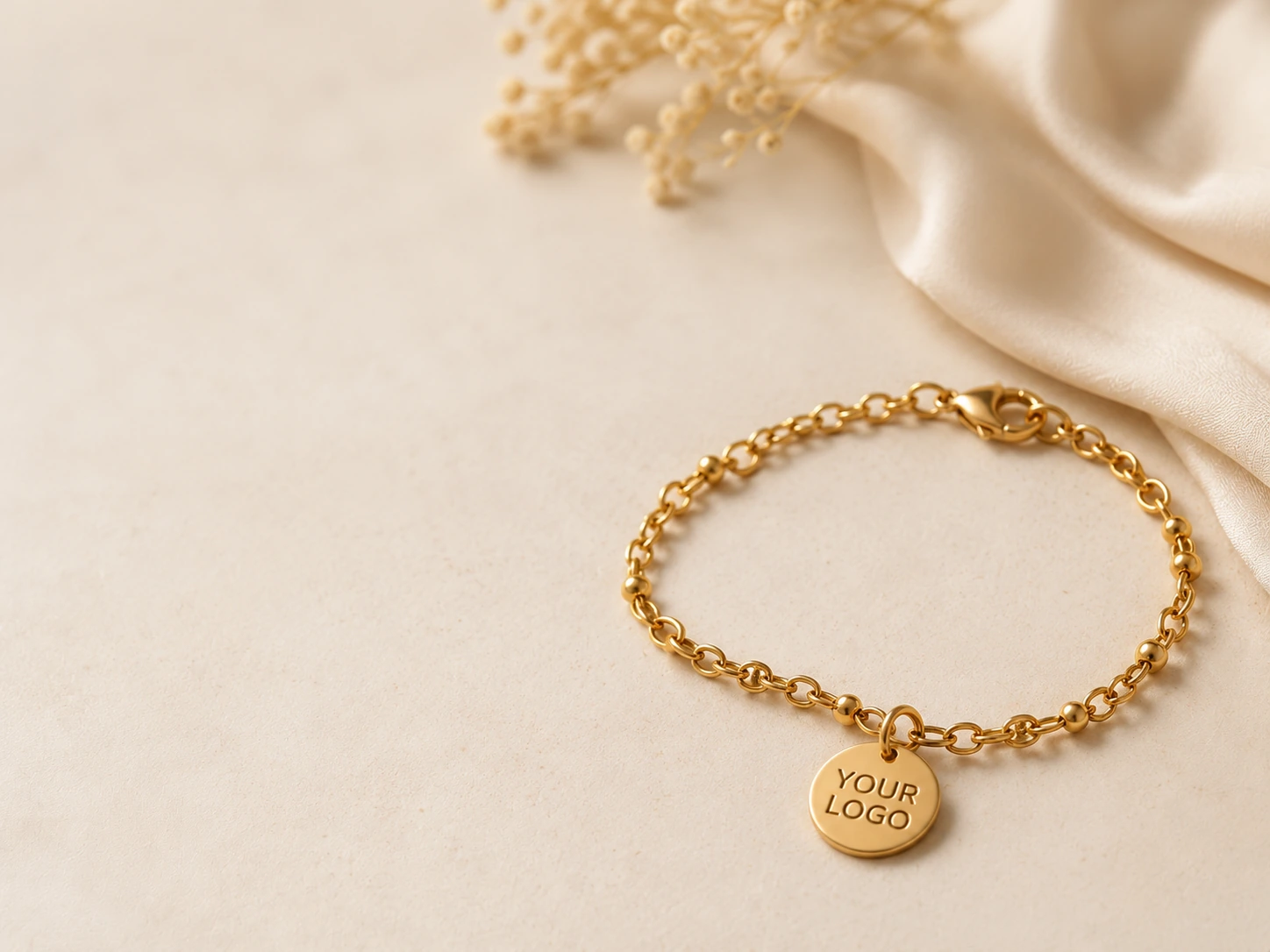
Product-level branding should also be discussed early. An engraved tag or branded charm may affect both the design and its manufacturing requirements. Provide usable artwork and approve the placement on the physical sample.
For online sellers, assign clear SKU identifiers to each style, length and finish so the correct product can be packed and replenished later.
Prepare for a First Order and Future Reorders
Before ordering, establish a realistic initial quantity for each variant. Ask whether MOQ is calculated per design, color or size, and how additional packaging requirements may affect the purchasing plan.
Keep an approved product specification, sample photos and packaging files. When sales data identifies a strong-performing style, these records help the brand communicate what should remain unchanged in a reorder and what needs to be revised.
Plan the Handover From Manufacturing to Retail
A product launch is not complete when the bracelets leave the supplier. Establish how each unit will be identified and counted, whether the packaging is retail-ready, and what documentation accompanies the order. For an ecommerce business, prepare a product listing that distinguishes the wearable length from the total chain length, explains any adjustable range and uses material descriptions supported by the approved specification. Keep the product photos tied to the actual finish and variant.
For reorders, retain a sample, SKU list, component specification, approved artwork, packaging dimensions and the original purchase order. When reviewing early sales, look separately at customer demand and product returns. A style with strong sales but frequent fit-related returns may need a size adjustment rather than a larger purchase of the original version. If a revision is necessary, assign a new specification version and make sure the next production order identifies it clearly. Avoid mixing changed and unchanged versions under a single indistinguishable inventory code.
Frequently Asked Questions
Do I need CAD files to start a custom bracelet project?
Not necessarily. A sketch, reference image or existing sample can help begin the discussion. Additional drawings or technical specifications may be needed depending on the product structure.
Can I use my own logo and packaging?
Private-label options may include product branding and custom packaging. The available methods, charges and minimum quantities depend on the selected design and packaging format.
How many bracelet styles should a new brand launch with?
There is no universal number. Start with the assortment your budget can develop, photograph, stock and replenish properly. A coordinated capsule with a few well-defined styles is often easier to manage than a large launch with many untested variants.
How can I protect an original bracelet design?
Use designs and references you have permission to use, agree on confidentiality and ownership terms with the supplier, and clarify how custom artwork and tooling may be used. Seek appropriate professional advice if your collection depends on formal intellectual property protection.
Conclusion
A focused assortment, a clear development brief and an approved sample provide a stronger foundation than launching a large number of untested styles. HaoLustra is worth considering for businesses planning a branded bracelet line and seeking support with design development, sampling and repeat production. Share your intended styles, customer profile, quantities and branding requirements to establish a practical development plan.