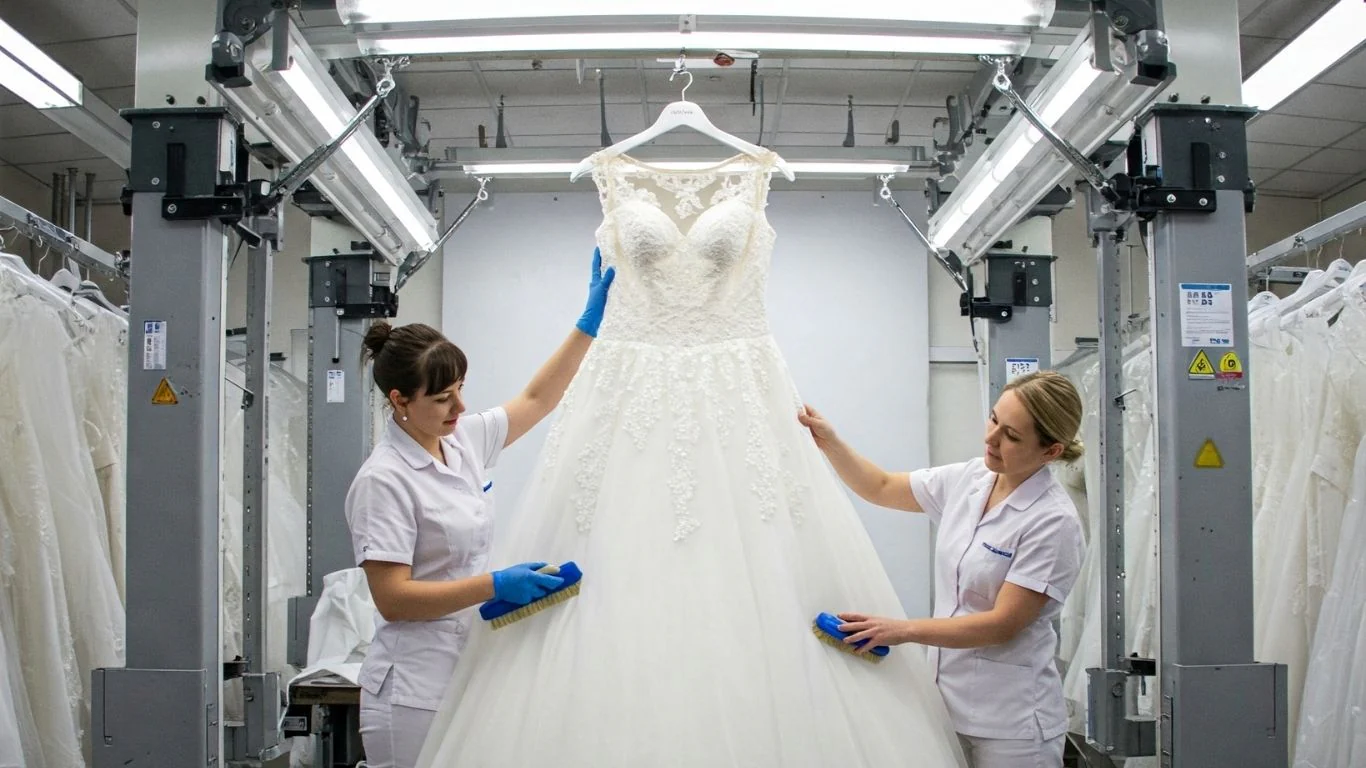
Preserving Delicate Details: Expert Care for Embellished Gowns, Crystals, and Competition Wear
Few garments carry as much artistry, emotion, and intricate craftsmanship as wedding gowns, reception evening wear, and handcrafted performance apparel. Adorned with delicate embroidery, illusion mesh, and thousands of light-catching rhinestones, these statement pieces are designed to dazzle under bright spotlights and cathedral lighting alike.
Yet, the very elements that make crystal-embellished garments breathtaking also make them uniquely fragile. Traditional dry-cleaning chemicals can dissolve specialized heat-activated stone glues, while standard machine cycles risk snagging fine illusion mesh. Whether preserving a bridal gown or maintaining bespoke competition wear, understanding proper handling ensures every facet retains its brilliant sparkle for years to come.
1. The Anatomy of Stone Adhesives: Why Heat and Solvents Fail
Most modern crystal embellishments rely on specialized hotfix adhesives or industrial-grade flexible textile glues. These bonding agents are engineered to maintain adhesion while moving with flexible, body-contouring fabrics.
However, these adhesives have two primary vulnerabilities:
- Perchloroethylene and Dry-Cleaning Solvents: Commercial dry cleaners rely on chemical solvents that break down organic bonding polymers. When exposed to these solutions, crystal backings cloud over, degrade, and detach from the fabric.
- Direct High Heat: Pressing an iron directly against stones or exposing them to heated mechanical tumblers reactivates the adhesive, causing stones to shift, leave sticky residue on delicate fabrics, or fall off entirely.
2. The Art of the Cool Water Bath: Safe Washing Protocols
When hand-cleaning delicate beaded silhouettes or crystal-adorned bodices, patience and gentle immersion are essential.
- Prepare a Clean Basin: Fill a spotless sink or basin with cool water (never exceeding 25°C / 77°F). Dissolve a minimal amount of pH-neutral, liquid detergent formulated for delicate silks or lingerie. Granular detergents should never be used, as unmixed crystals can scratch faceted stones.
- Gentle Submersion: Turn the garment inside out where possible, submerge it gently, and move it through the water using smooth, side-to-side motions. Avoid twisting, wringing, or rubbing stone-laden surfaces together.
- Targeted Spot Treatment: For localized stains around necklines or underarms, use a soft makeup sponge dampened with mild soapy water to dab the fabric gently from the underside.
- Flushing and Rinsing: Drain the basin and refill with clear, cold water. Submerge the garment several times until all detergent residue is completely rinsed away.
3. Moisture Extraction: The Towel Compression Method
Wringing out an embellished garment puts dangerous rotational stress on stitched threads and glued appliques. Instead, utilize the flat compression method:
Lay a thick, clean white bath towel flat on a hard surface. Place the damp garment smoothly on top. Roll the towel and garment together snugly—similar to a sushi roll—and press down firmly with your palms along the roll. The terry cloth absorbs excess moisture safely without dislodging a single stone.
4. Steaming, Finishing, and Long-Term Archival Storage
Direct contact with a traditional flat iron is strictly forbidden on crystal-embellished panels. To release travel folds and packaging creases safely:
- Reverse Steaming: Hold a vertical garment steamer approximately 15 to 20 cm away, applying steam strictly from the interior or reverse side of the fabric. This relaxes natural and synthetic fibers without softening crystal bonds on the exterior.
- Padded Horizontal Drying: Never hang a heavy, damp embellished gown on standard wire hangers. Heavy wet fabrics will stretch out delicate illusion mesh and distort shoulder seams. Always lay the piece flat on a drying rack until thoroughly dry.
- Breathable Archival Storage: Once dry, store your pieces in breathable cotton or muslin garment bags. Plastic bags trap atmospheric humidity, which can degrade stone foils and promote mildew over extended periods.
Final Thoughts: Professional Standards for Delicate Craftsmanship
Heirloom bridal gowns, gala wear, and stage-ready competition apparel represent substantial investments of technique, time, and personal milestone memories. When investing in specialized performance outfits and handcrafted training gear from specialists like AcroFlyDance aerial and dance studio equipment, following dedicated preservation methods protects structural craftsmanship for the long haul.
By incorporating cold-water bathing, gentle towel drying, and breathable storage, you safeguard the structural integrity of every seam and ensure your crystal details remain radiantly luminous for every milestone moment.