Babeltee: Meaning, Uses, Benefits, and Key Things to Know
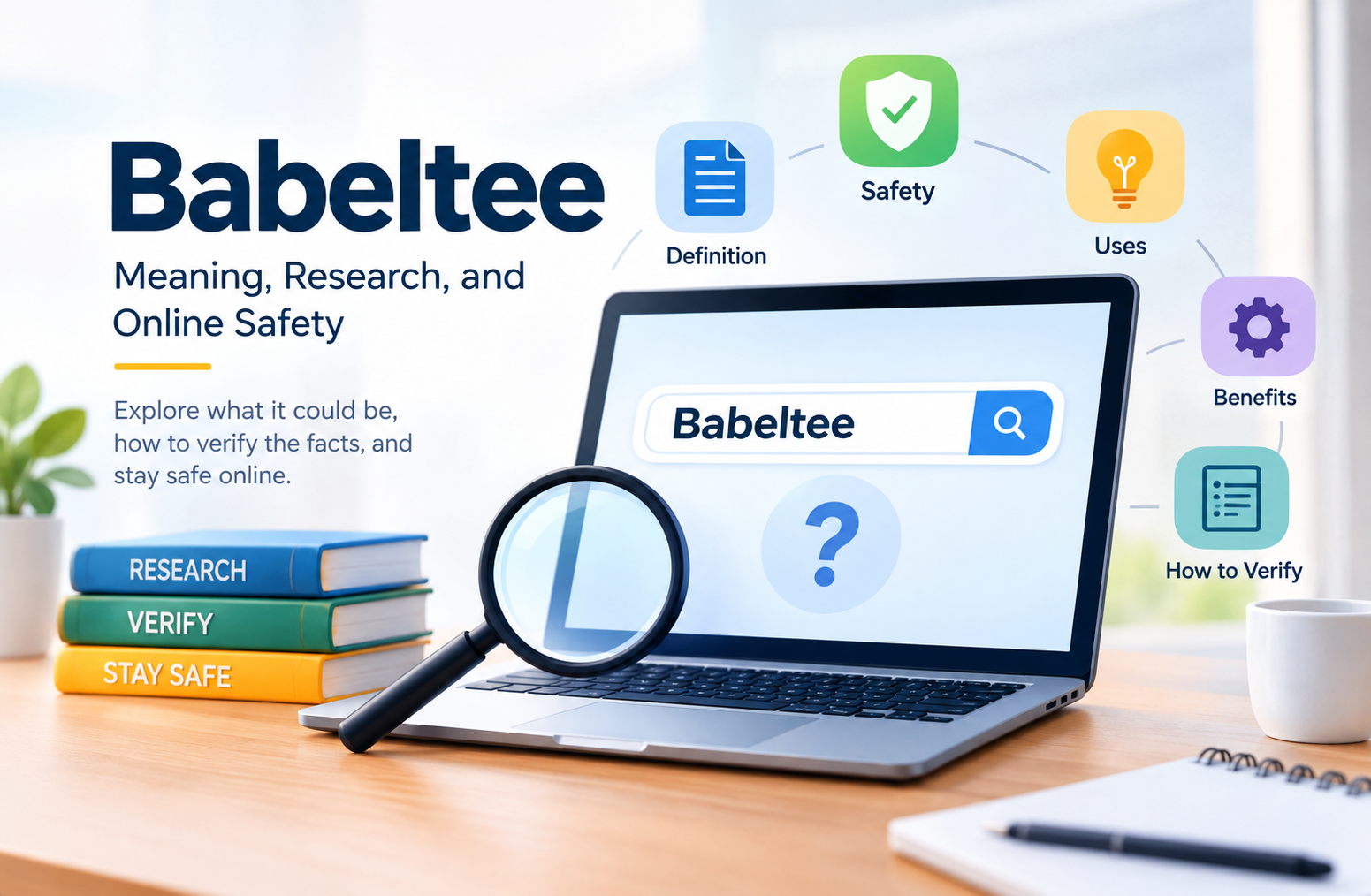
Babeltee is a term that may attract attention from people looking for information about an online platform, a digital service, a brand, or an emerging concept. Understanding Babeltee requires looking beyond the name itself and examining its context, intended purpose, potential applications, and the evidence available to support claims about it. When a term has limited or unclear documentation, it is especially important to separate verified information from assumptions.
People searching for an unfamiliar name usually want straightforward answers. They may want to know what it means, how it works, who might use it, and whether it is relevant to their needs. This guide explores those questions using a practical, information-focused approach. However, no supporting real-world data, official website, or source material was included with the topic, so specific claims about the identity, ownership, features, or history of this term cannot be confirmed.
What Is Babeltee?
Babeltee is a name whose precise meaning and intended use cannot be established confidently from the keyword alone. It may refer to a website, product, service, online community, or another subject. Without an official description or reliable reference, assigning it a definite identity would risk misleading readers.
This distinction matters because unfamiliar names can appear in several different contexts. A term may be associated with a new business, a developing digital product, a niche website, or a phrase used within a particular community. Similar-looking names can also refer to unrelated entities.
The most reliable way to understand a term is to identify where it originated and how its owner or publisher describes it. An official website, a verified company profile, published documentation, or a credible third-party report can provide useful evidence.
Until that information is available, the name should be treated as an identifier that needs further verification rather than a fully established concept with confirmed features.
Why Are People Searching for Babeltee?
People search for unfamiliar terms for different reasons. Understanding these motivations helps explain what information a useful article should provide.
Curiosity About an Unfamiliar Name
A person may encounter a name in a search result, social media post, online discussion, or recommendation. They may then search for it to understand its meaning.
In this situation, the most useful information includes a clear definition, the context in which the name appears, and evidence that distinguishes the subject from similarly named entities.
Looking for a Website or Online Service
Some searches are intended to locate a particular website or digital service. Users may want to know whether the website is legitimate, what it offers, and how to access it safely.
Before relying on a website, readers should check its official domain, contact details, privacy policy, and published terms. A familiar-sounding name alone does not prove that a website is authentic.
Researching a Brand or Product
A search may also be motivated by an interest in a possible brand or product. Consumers generally want to understand its purpose, pricing, features, limitations, and reputation before making a decision.
These details should be supported by product documentation, transparent pricing information, or credible user feedback. Unverified descriptions should not be treated as established facts.
Checking Safety and Reliability
Another common reason for researching an unfamiliar name is concern about safety. Users may want to know whether a website collects personal information, requests payment, or requires an account.
These concerns are reasonable, but a responsible assessment must rely on evidence rather than assumptions. The absence of publicly available information does not automatically establish that a service is unsafe, just as a professional-looking website does not automatically establish that it is trustworthy.
How to Research Babeltee Effectively
Researching an unfamiliar name is easier when the process follows a clear order. Instead of relying on a single search result, compare information from different sources and look for details that can be independently verified.
1. Start With the Original Source
The first step is to locate the original source associated with the name. This could be a website, a product listing, an official announcement, or a profile maintained by the organization responsible for it.
An original source can help answer several questions:
- What does the organization or publisher say the name represents?
- What problem, if any, does the product or service aim to solve?
- Who is the intended audience?
- Is there documentation explaining how it works?
- Are the terms of use and privacy practices available?
An official source is a useful starting point, but its claims should still be evaluated critically. Businesses and publishers naturally present their offerings in a favorable way. Independent evidence is often needed to assess performance, reliability, or customer satisfaction.
2. Check the Exact Spelling
Small spelling differences can lead to entirely different results. A single changed letter, missing character, or extra word may direct users to an unrelated business or website.
When researching a name, compare the spelling across search results, website addresses, company profiles, and relevant documents. Check whether different sources consistently refer to the same entity.
This is particularly important when a name is uncommon or has little established information online.
3. Compare Independent Sources
A useful research process considers more than one source. Look for independent reporting, technical documentation, professional directories, or reviews that explain the subject in specific terms.
For example, an independent review that describes a product’s actual features is generally more informative than a page that simply repeats promotional language.
When comparing sources, consider:
- Whether the author identifies the source of the information.
- Whether claims include supporting evidence.
- Whether the information has a publication or update date.
- Whether independent sources agree on important details.
- Whether the author has a commercial interest in the subject.
Agreement between independent, credible sources can increase confidence, although it does not guarantee that every claim is correct.
4. Separate Facts From Assumptions
One of the most important research habits is distinguishing verified facts from reasonable possibilities.
A verified fact is supported by reliable evidence. An assumption is a conclusion that has not been adequately established. A possibility is something that could be true but still requires confirmation.
For example, an unfamiliar name might look like a digital brand. That observation does not establish that it operates an application, offers paid services, or maintains a registered business.
Keeping these distinctions clear helps readers make informed decisions without being influenced by unsupported descriptions.
Potential Uses and Applications
The specific applications of this term remain unverified. Nevertheless, there are several ways to investigate its relevance depending on the context in which a reader encounters it.
Understanding a Digital Platform
If the name refers to a digital platform, the main questions concern its purpose, functionality, and intended users.
A platform may help people communicate, access information, organize tasks, manage content, or complete specialized activities. However, none of these functions should be attributed to a particular platform without supporting documentation.
Readers should look for an official feature list, user instructions, account requirements, and examples of completed tasks. These details provide a more useful understanding than a broad marketing description.
Evaluating a Product or Service
If the name identifies a product or service, research should focus on the practical value it offers.
A useful evaluation examines the problem being addressed, the features available, the cost of using the product, and any important restrictions. It should also consider whether comparable alternatives offer better value.
A product may appear attractive because of its presentation, but practical performance matters more than branding alone. Independent reviews, documented demonstrations, and clear specifications can help establish whether it meets a particular need.
Researching an Online Information Source
If the name appears on a website that publishes information, the quality of that information becomes a central consideration.
Readers should examine whether articles identify their authors, distinguish reporting from opinion, provide references for factual claims, and correct outdated information. Pages that make significant claims without supporting evidence deserve additional scrutiny.
It is also useful to determine whether the website specializes in a particular subject or publishes material across unrelated topics. Neither approach automatically indicates quality, but the site’s focus may help readers understand its expertise and intended audience.
Exploring a New or Niche Concept
Some terms gain attention before they have a large public footprint. They may emerge within a small industry, an online community, or a developing area of technology.
In these situations, information can be incomplete or change rapidly. The best approach is to examine original announcements, dated documentation, and evidence from knowledgeable sources.
Readers should avoid treating popularity in a small group as proof of broad adoption. Likewise, a lack of widespread recognition does not necessarily mean a concept has no practical value.
Possible Benefits of Understanding the Term
Researching an unfamiliar name can provide several practical benefits, even when the available information is limited.
Better-Informed Decisions
Reliable information helps people decide whether a subject deserves further attention. Instead of relying on a name, advertisement, or short description, readers can evaluate the evidence and compare it with their actual needs.
This approach is useful when considering unfamiliar products, online services, or information sources.
Reduced Risk of Confusion
A careful investigation can prevent users from confusing unrelated websites, businesses, or products. Verifying the exact domain and official identity is particularly important when several entities use similar names.
Clear identification also makes later research more efficient because it helps users focus on the correct subject.
Improved Digital Awareness
Learning how to verify unfamiliar names builds habits that apply across the internet. Readers become more comfortable checking sources, recognizing unsupported claims, and evaluating privacy disclosures.
These skills are useful far beyond a single search term. They can help people make better decisions whenever they encounter an unfamiliar digital service or online resource.
More Efficient Research
A structured approach prevents unnecessary time spent reading repetitive or low-quality pages. Starting with original documentation, then checking independent evidence, creates a more direct path toward a reliable answer.
It also helps identify when the available evidence is insufficient. Recognizing that limit is a valuable research outcome, not a failure.
Challenges and Limitations to Consider
There are several challenges associated with investigating a name that lacks a clear, verified description.
Limited Public Information
An unfamiliar term may have few authoritative sources available. In that situation, search results can be repetitive, vague, or based on speculation.
The absence of reliable information limits what can responsibly be concluded. It does not justify inventing a history, business model, product category, or set of features to make an explanation sound complete.
A useful article should communicate what is known, identify what remains unclear, and explain how the missing information could be verified.
Conflicting Search Results
Search engines may return pages that use the same word in different contexts. Some results may discuss a business, while others refer to a similar phrase or unrelated topic.
Readers can reduce this confusion by checking the exact spelling, domain name, author, and surrounding context. They should also confirm that a source is actually discussing the entity they intend to research.
Unverified Reviews and Claims
Online reviews can provide useful insights, but their quality varies. Some are based on direct experience, while others may be incomplete, promotional, outdated, or unrelated to the subject.
A single positive or negative review should not determine an overall judgment. Look for specific examples, consistent patterns, and independent confirmation.
Where meaningful reviews are unavailable, it is better to acknowledge the limitation than to imply that a reliable public consensus exists.
Difficulty Assessing Trustworthiness
Trustworthiness cannot be established from appearance alone. A website may use professional design while providing little information about its operators, data practices, or terms of service.
Conversely, a small or unfamiliar project may have legitimate purposes despite limited public recognition.
The right assessment considers multiple indicators together, including transparency, technical security, verifiable ownership, privacy practices, and the quality of available evidence.
Information That Becomes Outdated
Websites change ownership, products change features, and services may discontinue operations. Even accurate information can become outdated.
For that reason, readers should check publication dates and verify important details before acting on them. Information about pricing, availability, registration, and current functionality requires particular care.
How to Check Whether a Website Is Trustworthy
If the term leads to a website or online service, evaluating that website should be a separate step from identifying its name. The following checks can help readers assess whether a site provides enough information to be used with confidence.
Examine the Website Address
Start by checking the complete web address. Look for misspellings, unexpected domain extensions, or additional words that make the address different from an official domain.
A secure connection, usually indicated by HTTPS, protects information exchanged between a browser and a website against certain forms of interception. However, HTTPS does not prove that the website operator is honest or that the service is legitimate.
Always confirm that the address matches the organization you intend to visit before entering account credentials or payment details.
Look for Verifiable Contact Information
A trustworthy service should provide appropriate ways to contact its operator. Depending on the type of organization, these may include a business email address, support page, company address, or clearly identified customer service channel.
Contact information should be consistent across official pages. If a business claims to be established in a particular country, readers can look for relevant public registration information where available.
The absence of a particular contact method is not conclusive proof of misconduct, but a complete lack of verifiable information can make it harder to resolve disputes or obtain assistance.
Read the Privacy Policy
A privacy policy should explain what personal information a service collects, why it collects it, how that information is used, and whether it is shared with other parties.
Before creating an account, consider whether the requested information is necessary for the service’s stated purpose. Be cautious if an unfamiliar website requests sensitive information without a clear explanation.
Readers can also check whether the policy explains account deletion, data retention, and available privacy choices.
Review Payment and Subscription Terms
If a service charges money, examine its pricing and payment terms before proceeding. Confirm the total cost, billing frequency, renewal conditions, cancellation process, and refund policy.
Avoid assuming that a free trial will remain free or that cancellation will happen automatically. The exact terms should be stated clearly before payment.
If a website uses pressure tactics, hides recurring charges, or makes cancellation unusually difficult, those are reasons to investigate further.
For general guidance on recognizing and reporting online fraud, consult the Federal Trade Commission’s consumer advice.
Check Account Security
If an account is required, use a unique password rather than reusing credentials from other websites. Enable multifactor authentication if the service supports it.
Do not share verification codes with someone claiming to represent a platform. Avoid downloading files or installing applications from sources that cannot be verified.
These precautions are useful for unfamiliar services as well as established websites. They reduce avoidable risks without requiring users to assume that every new platform is dangerous.
A Practical Step-by-Step Research Method
A repeatable research process makes it easier to investigate unfamiliar terms without wasting time or reaching premature conclusions.
Step 1: Define the Question
Start by deciding what you actually need to know. Are you trying to identify a name, locate an official website, understand a product, or evaluate a service’s safety?
A focused question produces more useful results than searching for a name without a clear objective.
For example, identifying a company’s official website requires different evidence from evaluating the quality of its products.
Step 2: Search for an Official Description
Look for a source that directly explains the subject. If an official website exists, review its introductory pages, documentation, and contact details.
Record the claims made by the source, but do not automatically treat promotional statements as independently verified facts.
If no official source can be identified, keep that limitation in mind throughout the investigation.
Step 3: Verify the Identity
Compare the spelling, domain, ownership details, and descriptions found across credible sources. Determine whether the sources refer to the same entity.
This step is especially important when a name could belong to multiple organizations or products.
Step 4: Find Independent Evidence
Search for credible reporting, detailed reviews, relevant public records, or documentation produced by independent parties.
Give more weight to sources that provide specific evidence and explain how their conclusions were reached.
Avoid counting several pages as independent confirmation when they all repeat information from the same original source.
Step 5: Evaluate Practical Relevance
Once the identity is clear, determine whether the subject serves your needs.
Consider its purpose, usability, cost, limitations, privacy practices, and available alternatives. A service can be legitimate without being suitable for every user.
A balanced evaluation should include disadvantages as well as potential benefits.
Step 6: Check Current Details
Confirm that important information is recent enough to support your decision. If a source describes a service’s features or prices, check whether those details remain current.
For a changing online service, older reviews may describe a version that no longer exists.
Step 7: Make a Proportionate Decision
Use the available evidence to determine the next step. If the subject is well documented and meets your needs, further investigation may be straightforward.
If important questions remain unanswered, delay decisions involving sensitive data, software installation, or financial commitments until you have enough reliable information.
Not every unfamiliar name requires an extensive investigation. The depth of research should match the importance and potential consequences of the decision.
Common Mistakes to Avoid During Research
Several avoidable mistakes can lead to inaccurate conclusions about an unfamiliar name.
Assuming the Name Explains the Product
A name may suggest a particular industry or function, but that suggestion is not evidence. Avoid inferring features, ownership, or intended use from spelling alone.
Trusting the First Search Result
The first result is not necessarily the most authoritative or relevant. Search rankings can reflect many factors, and visibility does not guarantee accuracy.
Compare sources before relying on significant claims.
Treating Popularity as Proof of Quality
A widely discussed service is not automatically reliable, and a lesser-known project is not automatically poor. Popularity is one piece of context, not a substitute for evaluating evidence.
Ignoring Negative Information
Research should not focus exclusively on favorable descriptions. Look for documented complaints, recurring technical issues, unclear payment terms, or other relevant limitations.
At the same time, distinguish substantiated problems from unsupported accusations.
Repeating Unconfirmed Claims
Publishing an attractive description is not worth sacrificing accuracy. If a name’s identity is uncertain, do not invent its founder, launch date, location, services, or customer base.
This is important for readers and publishers alike. Reliable explanations make uncertainty clear rather than concealing it behind confident language.
How Publishers Can Write Responsibly About Unfamiliar Keywords
Writers and website owners sometimes encounter search terms for which reliable background information is difficult to find. Producing useful content in this situation requires more than repeating the keyword throughout an article.
First, identify the likely information need. Determine whether readers want a definition, an official website, a product review, or a safety assessment. Then locate evidence that addresses that need directly.
Second, use claims that can be supported. If the subject’s identity cannot be confirmed, explain the limitation instead of constructing a fictional profile.
Third, make the article useful through practical guidance. Research methods, verification checklists, and explanations of relevant risks can help readers even when information about the specific subject is limited.
Fourth, keep the content proportionate to the evidence. A long article should not become a collection of repetitive paragraphs designed only to reach a word count.
Finally, update the article if stronger evidence becomes available. A clearly dated update can help readers understand when new information was incorporated.
These principles support reader trust because they prioritize accuracy, clarity, and practical value over unsupported certainty.
Frequently Asked Questions About Babeltee
1. What is Babeltee?
Babeltee is a term whose exact identity and meaning cannot be verified from the keyword alone. An official website, reliable description, or other authoritative source is needed to establish what it refers to.
2. Is Babeltee a website or an online platform?
That has not been confirmed. The name could refer to different types of entities, and identifying it as a website or platform requires supporting evidence.
3. How can I find the official website?
Search for the exact spelling and compare the results with any available official company profiles, documentation, or announcements. Verify the domain before sharing personal information or making payments.
4. Is Babeltee safe to use?
Its safety cannot be determined without identifying the relevant website, product, or service. Check its ownership information, privacy policy, security practices, independent reviews, and payment terms before using it.
5. Why is it important to verify unfamiliar names?
Verification helps prevent confusion between unrelated entities and reduces the risk of relying on misleading information. It also allows readers to make decisions based on evidence rather than assumptions.
6. What should I do if reliable information is unavailable?
Avoid making assumptions about the subject’s identity or features. Look for original documentation, seek independent confirmation, and postpone decisions involving sensitive information or money until the important details can be verified.
Conclusion
Understanding an unfamiliar term requires careful research, reliable evidence, and a willingness to acknowledge uncertainty. In the case of Babeltee, the available information does not establish a definitive identity, official purpose, ownership, or set of features. Those details should be confirmed before drawing conclusions about what it offers or how it works.
The most effective approach is to begin with an original source, verify the exact spelling, compare independent references, and examine any relevant privacy, security, and payment information. These steps help readers distinguish established facts from assumptions and evaluate whether a subject deserves further attention.
It is equally important to recognize the limits of online research. Search visibility, professional presentation, and repeated claims do not independently prove legitimacy or quality. Strong conclusions require credible supporting evidence.
Ultimately, accurate information is more valuable than a confident but unsupported description. By applying a consistent verification process, readers can investigate unfamiliar names more efficiently, avoid unnecessary risks, and make decisions based on what can actually be established.