A Complete Guide to Fiberglass Entry Door Styles, Designs, and Finishes
Choosing the right entry door is an important part of creating an attractive, comfortable, and secure home. The front door is often one of the first features visitors notice, and its appearance can influence the overall character of a property. Along with visual appeal, homeowners also need to consider durability, maintenance, insulation, and long-term performance. Fiberglass entry doors offer a practical combination of these qualities, making them a popular option for different architectural styles.
Modern fiberglass exterior doors are available in a wide range of designs, textures, colors, and finishes. Whether a homeowner prefers a traditional appearance, a contemporary design, or the natural look of wood, there are options to complement almost any home. Understanding the available styles and finishes can make it easier to choose a door that suits both personal preferences and practical requirements.
Understanding Fiberglass Entry Doors
Fiberglass entry doors are manufactured using reinforced fiberglass materials, often combined with an insulated core. This construction provides strength and helps the door maintain its shape under changing weather conditions.
Unlike traditional wood doors,fiberglass exterior doors are less likely to absorb moisture, swell, or develop rot. They can also be designed with textured surfaces that closely resemble natural wood grain. This allows homeowners to enjoy the appearance of wood without dealing with all the maintenance challenges associated with traditional wooden doors.
Another advantage is design flexibility. Manufacturers offer fiberglass doors in different sizes, panel arrangements, glass configurations, and decorative finishes. Homeowners can select a simple design for a minimalist property or a more detailed option for a traditional entrance.
Popular Fiberglass Entry Door Styles
The style of an entry door should complement the architecture of the home. A well-chosen design creates visual harmony and makes the entrance feel more welcoming.
Traditional Panel Doors
Traditional panel doors remain a popular choice for classic and transitional homes. They usually feature raised or recessed panels arranged in symmetrical patterns.
Common design options include:
- Two-panel doors with a simple, balanced appearance.
- Four-panel doors for a more detailed traditional look.
- Six-panel doors that suit classic residential architecture.
- Decorative molding and raised panel details for added character.
These styles work particularly well with brick homes, colonial-inspired properties, and houses with traditional exterior features.
Contemporary Fiberglass Doors
Contemporary designs focus on clean lines, simple shapes, and minimal decoration. They are suitable for modern homes where simplicity and balanced proportions are important.
Popular contemporary features include:
- Smooth, flat door surfaces.
- Horizontal or vertical decorative lines.
- Large geometric glass panels.
- Minimalist hardware.
- Dark or neutral color finishes.
Black, charcoal, gray, and natural wood-inspired finishes are commonly selected for contemporary entrances. These colors can create a sophisticated appearance when paired with modern exterior materials.
Craftsman-Style Doors
Craftsman-style fiberglass doors are known for their practical and decorative details. They often feature a large upper glass section, sometimes divided into smaller panes, with a solid lower panel.
These doors are suitable for homes with natural materials, visible wood details, and traditional architectural elements. Decorative glass, warm wood-grain finishes, and simple panel designs can help create an inviting entrance.
Rustic and Farmhouse Designs
Rustic and farmhouse-style doors bring warmth and character to residential exteriors. They often feature wood-inspired textures, simple panel arrangements, and earthy colors.
Popular choices include:
- Dark walnut-inspired finishes.
- Weathered wood appearances.
- Deep brown and muted gray tones.
- Simple rectangular glass inserts.
- Black or antique-style hardware.
Fiberglass doors can provide the appearance of rustic wood while offering better resistance to moisture-related problems than many traditional wooden options.
Wood-Grain Finishes for a Natural Appearance
One of the most attractive features of modern fiberglass doors is their ability to imitate natural wood. Manufacturers use textured surfaces and specialized finishing techniques to reproduce the appearance of different wood species.
This makes it possible to achieve a warm, natural entrance without selecting a solid wood door.
Oak-Inspired Finishes
Oak-style finishes are popular because of their recognizable grain patterns and versatile appearance. They can complement traditional, transitional, and contemporary homes.
Light oak tones create a bright and natural look, while darker variations provide a richer appearance. These finishes work well with neutral exterior colors, stone details, and brick walls.
Mahogany-Inspired Finishes
Mahogany-inspired finishes offer a deep, elegant appearance. Their darker reddish-brown tones can make an entrance look more formal and sophisticated.
They are often selected for traditional homes, luxury properties, and entrances with decorative glass or detailed hardware.
Walnut-Inspired Finishes
Walnut-style finishes provide a rich brown appearance with distinctive grain patterns. They are suitable for homeowners who want a warm and refined entrance without choosing an overly decorative design.
Walnut-inspired fiberglass doors can pair beautifully with cream, beige, gray, and stone-colored exteriors.
Smooth Painted Finishes
Not every homeowner prefers a wood-grain appearance. Smooth fiberglass doors can be painted in different colors to match the exterior design of a property.
Popular choices include:
- White for a clean and timeless appearance.
- Black for a bold and modern entrance.
- Navy blue for a distinctive traditional look.
- Gray for a balanced contemporary style.
- Red for a welcoming focal point.
- Deep green for a natural and elegant appearance.
The correct paint or finishing product should always be selected according to the manufacturer’s recommendations.
Glass Designs and Decorative Options
Glass can significantly influence the appearance of a fiberglass entry door. It allows natural light to enter the home and adds visual interest to the entrance.
However, homeowners should consider both appearance and privacy when selecting a glass configuration.
Clear Glass
Clear glass allows maximum visibility and natural light. It is a suitable option for homeowners who want a bright entrance and are comfortable with a more open appearance.
Frosted Glass
Frosted glass provides privacy while allowing light to pass through. It is particularly useful for front entrances that face busy streets or neighboring properties.
Textured Glass
Textured glass features decorative patterns that soften visibility and create an attractive appearance. It can complement both traditional and contemporary fiberglass doors.
Decorative and Patterned Glass
Decorative glass may include geometric patterns, traditional designs, or artistic details. Some options combine multiple glass textures with decorative internal or external elements.
When selecting glass, homeowners should also consider its energy performance, safety rating, and compatibility with the complete door system.
Choosing the Right Color for Your Entry Door
Color selection plays an important role in the overall appearance of a home’s entrance. The best choice depends on the exterior paint, roofing, windows, landscaping, and architectural style.
A few useful color combinations include:
- White exterior: Black, navy, gray, or natural wood-inspired doors can create an attractive contrast.
- Brick exterior: Dark brown, deep green, black, and traditional red can complement brick surfaces.
- Gray exterior: White, black, walnut, and navy can create a balanced appearance.
- Beige exterior: Mahogany, dark walnut, olive green, and charcoal can add warmth and depth.
- Modern exterior: Matte black, dark gray, and smooth neutral finishes can support a minimalist design.
Homeowners should examine physical finish samples when possible. Colors can appear different under natural sunlight, shade, and artificial lighting.
Fiberglass Entry Door Configurations
Beyond style and finish, the overall configuration of a door affects the appearance and functionality of an entrance.
Single Entry Doors
Single doors are suitable for most standard residential entrances. They are available in numerous panel designs, colors, textures, and glass options.
Double Entry Doors
Double fiberglass doors create a wider and more impressive entrance. They are commonly used in larger homes and properties with spacious front entryways.
Homeowners should consider the available opening, clearance, hardware, and installation requirements before selecting this configuration.
Doors with Sidelights
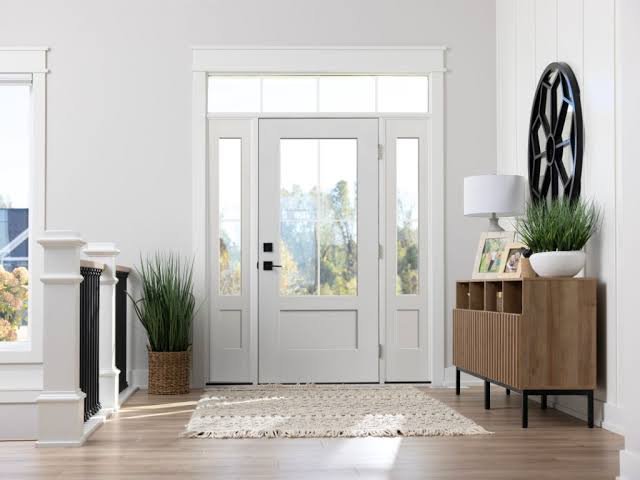
Sidelights are narrow glass panels positioned beside the main door. They allow additional natural light into the entrance and can make a smaller entryway feel more open.
They are available in clear, frosted, textured, and decorative glass designs.
Doors with Transoms
A transom is a glass panel installed above the entry door. It can add height and architectural interest while allowing more daylight into the interior.
Transoms are often combined with sidelights to create a more elaborate entrance design.
How to Match Door Finishes with Exterior Architecture
A fiberglass entry door should look like a natural part of the home’s exterior rather than an unrelated decorative feature.
For traditional homes, raised panels, warm wood-grain finishes, and decorative glass can create a consistent appearance. Craftsman-style properties may benefit from textured wood finishes and simple glass patterns.
Modern homes often look better with smooth surfaces, geometric details, and darker colors. Farmhouse properties can be complemented by rustic textures, muted shades, and simple hardware.
It is also important to consider other exterior features. Door hardware, window frames, lighting fixtures, porch materials, and house numbers can all influence the final appearance.
Maintenance Requirements for Different Finishes
Although fiberglass doors generally require less maintenance than traditional wood doors, their finishes still need proper care.
Regular cleaning helps preserve the appearance of the door and prevents dirt from building up on the surface.
Useful maintenance practices include:
- Clean the door using a soft cloth and mild cleaning solution.
- Avoid abrasive materials that may scratch the finish.
- Inspect painted surfaces periodically for damage.
- Follow manufacturer instructions for cleaning wood-grain finishes.
- Check weatherstripping for wear or gaps.
- Inspect hinges, locks, and other hardware regularly.
- Avoid harsh chemicals unless the manufacturer confirms they are suitable.
Painted and stained finishes may require occasional attention depending on sun exposure, weather conditions, and product specifications. Proper maintenance can help preserve the door’s appearance over time.
Important Factors to Consider Before Choosing a Design
Appearance is important, but homeowners should evaluate the construction and performance of a door before making a purchase.
Consider the following factors:
Material quality: Check the fiberglass construction and overall build quality.
Insulation: Look for an insulated core and suitable weatherstripping to support indoor comfort.
Energy performance: Review available energy ratings, U-factor, and air leakage information.
Glass quality: Choose appropriate glazing based on privacy, safety, and energy requirements.
Hardware: Select durable handles, hinges, locks, and deadbolts that complement the door design.
Size and measurements: Confirm the opening dimensions and whether a standard or custom configuration is required.
Warranty: Review the manufacturer’s warranty for the door, glass, hardware, and finish.
Professional installation: Proper installation helps ensure correct operation, weather resistance, and long-term performance.
Comparing these details can help homeowners select fiberglass doors that offer an appropriate balance of appearance, durability, and functionality.
Conclusion
Fiberglass entry doors offer homeowners a wide range of styles, designs, textures, and finishes to suit different architectural preferences. From traditional raised-panel designs and Craftsman-inspired entrances to smooth contemporary doors and natural wood-grain finishes, there are options for almost every type of property.
Choosing the right design involves more than selecting an attractive color. Homeowners should also consider glass configurations, door dimensions, insulation, hardware, maintenance requirements, and overall construction quality. By evaluating these features together, it becomes easier to select fiberglass exterior doors that enhance curb appeal while providing practical performance. A carefully chosen fiberglass entry door can create a welcoming entrance and complement the home’s exterior for years to come.