MataRecycler: Meaning, Benefits, and the Truth About Modern Recycling
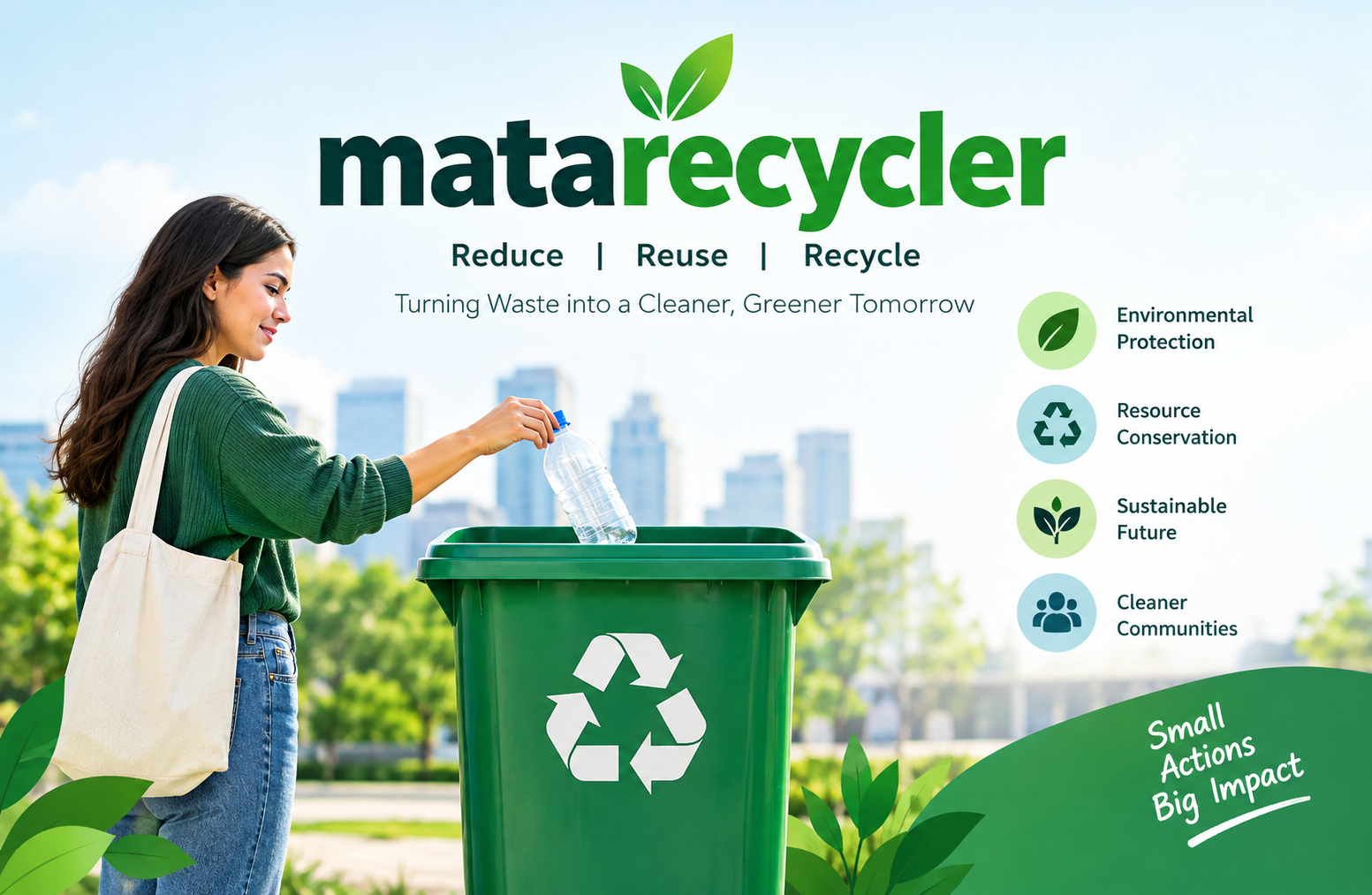
MataRecycler is a recycling-related term associated with sustainability, waste reduction, responsible resource use, and environmental awareness. If you have recently encountered MataRecycler online, you may be wondering what it means, how it works, and whether it refers to a real recycling product, a digital platform, or a broader environmental concept. The answer requires a careful look at the available information. Some websites describe it as an educational resource about recycling, while others associate the name with smart bins, artificial intelligence, and automated waste sorting. Understanding the difference between verified information and unconfirmed claims is essential for anyone researching this topic.
Recycling has become an important part of modern life because households, businesses, and communities generate large amounts of waste every day. Paper, cardboard, glass, metal, and certain plastics can often be recovered and processed into useful materials instead of being discarded. However, successful recycling depends on more than placing waste in a container. People need clear information, suitable collection systems, and reliable processing facilities.
This guide explores the meaning of MataRecycler, its connection with sustainable living, the principles behind modern recycling technology, its potential benefits, and the limitations readers should understand before relying on claims associated with the name.
What Is MataRecycler?
MataRecycler is a name associated with recycling education, environmental sustainability, waste management, and discussions about improving the way materials are reused. The website using the name presents itself as an informational platform intended to make recycling knowledge accessible to individuals, businesses, and communities.
Its general subject matter includes responsible waste disposal, recycling methods, environmental awareness, and sustainable practices. These topics are relevant to people who want to understand how everyday decisions affect resource consumption and waste production.
However, it is important to distinguish the name from a specific commercial technology. Available descriptions do not establish one universally recognised technical definition of MataRecycler or independently confirm that it is a particular recycling machine with a standard set of features.
Some online articles use the term to describe automated recycling systems that combine cameras, sensors, artificial intelligence, and data analysis. Although these technologies exist in the wider waste management industry, their existence does not prove that they are incorporated into a verified product bearing this name.
A useful way to understand the subject is to separate three related ideas:
- Recycling education: Information that explains how to reduce waste, identify recyclable materials, and dispose of items responsibly.
- Sustainable resource management: Practices that extend the useful life of products and materials through reuse, repair, recycling, and better purchasing decisions.
- Smart recycling technology: Equipment and software that can assist with identifying, separating, tracking, or collecting recyclable materials.
These areas overlap, but they are not interchangeable. An educational website can explain smart recycling without manufacturing recycling equipment or operating a waste processing facility.
For readers researching MataRecycler, this distinction provides a more reliable starting point than assuming every online description refers to the same product.
Why Is MataRecycler Attracting Attention?
Interest in recycling-related terms often reflects a wider concern about waste, environmental responsibility, and the growing role of technology in everyday services.
People want practical answers to questions such as which household items can be recycled, how recycling systems work, and whether technology can make waste collection more efficient.
MataRecycler appears in online discussions addressing these interests. Yet the available descriptions are not entirely consistent, which makes it especially important to examine the context in which the term is used.
Growing Interest in Sustainable Living
Many people are looking for realistic ways to reduce household waste without making their routines unnecessarily complicated. They want to know how to separate materials, reuse products, avoid unnecessary packaging, and choose disposal methods that match local recycling rules.
Educational resources can help turn general environmental concerns into manageable daily habits.
For example, a household might begin by keeping reusable shopping bags near the front door, separating clean cardboard from general waste, and checking whether the local collection service accepts particular plastic containers.
These actions may seem small, but consistent habits can make waste management easier and reduce avoidable contamination.
Increasing Use of Digital Information
Digital platforms have changed how people learn about environmental issues. Instead of relying only on printed instructions or local notices, readers can search for explanations of recycling symbols, waste categories, collection procedures, and sustainable alternatives.
An informational platform associated with MataRecycler fits within this broader educational landscape.
The value of such a resource depends on the quality of its information. Clear explanations, practical examples, transparent sourcing, and accurate descriptions of local recycling rules are more useful than impressive claims that cannot be verified.
Curiosity About Recycling Technology
Another reason for interest is the development of automated sorting equipment and data-driven waste management.
Modern recycling facilities may use optical sensors, magnetic separation, air classification, and robotic systems to identify or separate certain materials. These technologies can support industrial processing, but their effectiveness depends on the materials involved, the quality of the equipment, and the operating conditions.
Some online descriptions connect MataRecycler with these capabilities. Readers should treat those connections as descriptions of a possible technological concept rather than confirmed product specifications unless reliable documentation establishes otherwise.
Understanding the technology itself is still valuable because it helps readers evaluate what a genuine recycling solution can realistically achieve.
How MataRecycler Relates to Modern Recycling
To understand the ideas associated with MataRecycler, it helps to examine the recycling process from beginning to end. Recycling is not a single action. It is a chain of activities that begins when someone separates a discarded item and continues through collection, sorting, processing, and the manufacture of a new product.
A failure at one stage can affect the usefulness of the entire process.
1. Waste Identification and Separation
The first stage involves identifying the material being discarded and determining whether it belongs in a recycling stream.
Common material categories include:
- Paper and cardboard
- Glass bottles and jars
- Metal cans and other accepted metal products
- Certain plastic containers
- Selected electronic items through specialised collection systems
Not every item in these categories is accepted everywhere. Local recycling facilities differ in their equipment, processing capacity, and collection arrangements.
A cardboard box, for example, may be recyclable when it is reasonably clean and dry. Cardboard heavily contaminated with food or grease may need different handling, depending on local guidance.
Effective separation starts with understanding these distinctions rather than relying on appearance alone.
2. Collection and Transportation
Once materials have been separated, they must be collected and transported to suitable facilities.
Household recycling may be collected through curbside services, community drop-off points, or dedicated collection programmes. Businesses may use larger containers and scheduled pickups based on their waste volumes.
Collection efficiency depends on practical factors such as container capacity, collection frequency, transport distance, and the consistency of participation.
If containers overflow or collection schedules do not match actual demand, materials can become mixed with general waste or create avoidable operational problems.
Digital tracking systems can help organisations monitor collection needs, but the usefulness of such systems depends on accurate information and reliable implementation.
3. Sorting and Material Recovery
Collected materials often require additional sorting before processing.
Facilities may separate materials by size, weight, composition, colour, or other physical properties. Depending on the facility, this work may involve conveyor belts, screens, magnets, optical sorting equipment, and trained workers.
For example, magnets can help separate certain ferrous metals from mixed materials. Optical sorting equipment can identify selected materials using differences in their optical characteristics.
Automation can improve consistency in appropriate applications, but it does not eliminate every sorting challenge. Contaminated materials, overlapping physical characteristics, damaged items, and mixed-material packaging can complicate the process.
4. Processing and Manufacturing
After sorting, recovered materials may undergo cleaning, shredding, melting, pulping, or other processing methods suited to their composition.
The resulting material can then become an input for manufacturing.
Recovered paper fibres, for example, may be processed into new paper products. Suitable metal scrap can be remelted and used in manufacturing. Recovered glass may be processed for new glass products where the material quality and local facilities allow it.
The exact process depends on the material and the product being made.
5. Reuse and Return to the Economy
The final objective is to put recovered resources to productive use.
A successful recycling system needs buyers and manufacturers capable of using the recovered material. Collecting an item does not automatically mean that it will be recycled into a new product.
This is an important point for anyone evaluating environmental claims. Collection figures, sorting performance, actual material recovery, and the amount of recycled material used in manufacturing measure different stages of the process.
MataRecycler can be understood within this wider discussion of resource recovery, but the established recycling process should not be confused with unverified claims about a particular branded system.
Potential Benefits of the MataRecycler Approach
The benefits associated with MataRecycler depend on whether the term is being used for educational information, practical recycling habits, or a proposed technological solution.
It is reasonable to discuss the potential benefits of these approaches. It is not reasonable to assign specific performance figures to an unverified product.
Better Understanding of Recycling Rules
One of the most useful benefits of recycling education is that it helps people make better decisions about everyday waste.
Recycling instructions can be confusing because a material accepted in one area may not be accepted in another. People may also assume that an item is recyclable simply because it carries a recycling symbol.
Clear educational material can explain why material type, product design, contamination, and local processing facilities all matter.
For households, this knowledge can reduce confusion and help establish a consistent sorting routine.
For businesses, it can support staff training and make waste handling procedures easier to follow.
Reduced Contamination
Contamination occurs when unsuitable materials or substances enter a recycling stream and interfere with processing.
Examples include food residue on packaging, non-accepted plastics mixed with accepted containers, and materials placed in the wrong collection bin.
Contamination can lower the quality of recovered materials, increase sorting requirements, and sometimes make an entire batch unsuitable for a particular recycling process.
Better instructions and clear bin labels can help prevent common mistakes. Where suitable technology is available, automated identification systems may provide additional support.
However, the practical result depends on the specific waste stream and how the system is managed.
More Efficient Waste Management
Organisations need to know what kinds of waste they produce, how much they generate, and how frequently it needs to be collected.
A small office may generate mostly paper, packaging, and food waste. A manufacturing facility may handle larger quantities of production offcuts, metal scrap, or specialised materials.
Understanding these differences helps organisations select suitable containers, collection schedules, and disposal arrangements.
Digital records can make this process easier by identifying recurring patterns and highlighting areas where waste reduction may be possible.
For example, if an office repeatedly fills its cardboard container before the scheduled pickup, it may need a larger container or a revised collection frequency.
This is a practical operational improvement, not evidence that a particular branded platform has delivered a documented result.
Greater Environmental Awareness
Recycling education can help people understand that products require resources to manufacture and that discarded materials do not simply disappear.
A product may contain materials that can be recovered, reused, or processed, depending on its condition and the available infrastructure.
This understanding can encourage people to consider repair, reuse, and waste prevention before disposal.
It can also help consumers ask more informed questions about packaging, product durability, and end-of-life handling.
Potential Resource Conservation
Recycling can reduce demand for some virgin raw materials when recovered materials successfully replace newly extracted or produced resources.
The environmental benefits vary by material, processing method, energy source, transportation requirements, and the quality of the recovered output.
Recycling is therefore best viewed as one part of a broader resource management strategy. Reducing unnecessary consumption and extending product life can also play important roles.
Improved Organisational Accountability
Businesses and institutions may benefit from keeping records of the waste they generate and how it is handled.
Useful records can include collection volumes, contamination problems, recycling costs, and the destinations of recovered materials.
These records help managers identify operational weaknesses and assess whether a recycling programme is achieving its intended objectives.
If a digital platform is used for this purpose, its value depends on data quality, transparent reporting, and whether the information leads to better decisions.
Real-World Applications and Practical Examples
The ideas associated with MataRecycler can be explored through common recycling situations. The following examples illustrate established waste management practices rather than claiming that a specific MataRecycler product has been installed or tested at these locations.
Household Recycling
A household can improve its recycling routine by establishing clearly labelled containers for locally accepted materials.
Paper and cardboard can be kept separate from food waste, while accepted glass containers and metal cans can be collected according to local instructions.
Residents should check whether containers need to be rinsed, whether lids should be removed, and whether particular packaging types are accepted.
A simple household audit can also reveal avoidable waste.
For one week, residents can note which materials fill the general waste bin most frequently. If packaging dominates, they might consider buying products with less packaging or reusing suitable containers.
The purpose is not to recycle everything indiscriminately. It is to reduce unnecessary waste and place suitable materials into the correct collection stream.
Schools and Educational Institutions
Schools can use recycling education to connect environmental awareness with practical behaviour.
A useful programme might include clearly labelled collection stations, classroom explanations of material categories, and periodic reviews of common sorting mistakes.
Students could compare the types of waste produced during lunch breaks with those generated in classrooms. This can help them understand why different areas need different waste management arrangements.
Any measurements should be recorded honestly. A school should not claim that its recycling rate has improved unless it has suitable data to support that conclusion.
Educational activities are most effective when they explain the reasoning behind the rules rather than simply asking students to memorise bin colours.
Offices and Commercial Buildings
Offices frequently generate paper, cardboard, beverage containers, packaging, and general waste.
A practical recycling programme starts with a review of existing waste streams. Managers can then place containers where waste is generated, provide understandable instructions, and explain how collection works.
For example, placing a clearly labelled cardboard collection point near a delivery area may make it easier for staff to separate packaging before it becomes mixed with general waste.
Building managers can review collection records periodically to identify recurring issues.
If a recycling container regularly contains food waste or non-accepted materials, the solution may involve better signage, improved container placement, or more focused staff guidance.
Retail and Warehousing
Retailers and warehouses may generate substantial quantities of cardboard, plastic packaging, and other materials associated with receiving goods.
The most useful first step is to identify which materials are generated in significant quantities and whether reliable collection arrangements exist for them.
Suitable cardboard can often be flattened and stored in a designated area before collection. Other packaging materials require separate checks because acceptance varies by local programme.
Businesses should also consider whether packaging can be reused internally before it is recycled.
A durable shipping box, for example, may be suitable for another delivery if it remains in good condition and meets the requirements of the operation.
Municipal Waste Management
Municipal authorities must coordinate waste collection across neighbourhoods with different population densities, building types, and service needs.
A recycling programme may involve public education, collection schedules, drop-off facilities, sorting contracts, and reporting systems.
Technology can assist with monitoring collection volumes or identifying service problems, but it must support a workable physical infrastructure.
A digital dashboard cannot compensate for the absence of a suitable processing facility or a market for recovered materials.
Municipal programmes should therefore be evaluated through practical measures, such as service reliability, contamination levels, costs, and the quantity of material actually recovered.
Electronic Waste Collection
Electronic waste includes discarded devices and equipment that may contain recoverable materials as well as components requiring careful handling.
Items such as computers, mobile phones, and selected household electronics should be directed to appropriate collection or recycling services.
They should not automatically be placed in ordinary household recycling bins.
Batteries and electronic devices may present fire, chemical, or other safety risks when damaged or handled incorrectly. Local collection guidance should be followed, especially for lithium-ion batteries.
This example highlights a broader lesson: responsible recycling is not just about recovering materials. It also involves protecting workers, communities, and the environment during collection and processing.
The Role of Artificial Intelligence in Smart Recycling
Artificial intelligence is increasingly relevant to discussions about waste sorting and resource recovery. It can help analyse images, identify patterns, and support decisions in systems designed for specific materials.
However, artificial intelligence is not a replacement for every part of the recycling process.
Computer Vision and Material Identification
Computer vision systems analyse images to recognise objects or distinguish between visible characteristics.
In a suitable recycling facility, a system may be trained to identify selected packaging types or recognise differences between materials. The resulting information can help direct objects towards different sorting routes.
Performance depends on several factors:
- The quality and variety of the training data.
- Lighting, camera positioning, and object visibility.
- The range of materials the system is designed to recognise.
- The condition and cleanliness of the incoming waste.
- The equipment available to act on the system’s decisions.
A system trained to recognise common packaging may struggle with unusual products or materials that are partly hidden beneath other waste.
This is why claims about accuracy should be supported by independent testing or clear technical documentation.
Sensors and Automated Sorting
Different sensors can help recycling facilities distinguish materials based on their physical or chemical characteristics.
Depending on the installation, automated sorting equipment may use optical detection, magnetic separation, or other specialised methods.
These systems can process large quantities of material, but they require maintenance, suitable operating conditions, and ongoing quality checks.
They also work best when their capabilities match the waste stream they are expected to handle.
Data Collection and Reporting
Digital systems can collect information about waste volumes, collection schedules, equipment performance, and sorting outcomes.
Such records may help managers identify recurring problems and plan resources more effectively.
For example, collection data might show that a commercial building generates significantly more cardboard during certain periods. Managers could use that information to adjust container capacity or collection frequency.
Nevertheless, data collection is useful only when the underlying information is reliable and the results are interpreted correctly.
A dashboard showing the number of items collected does not necessarily show how many were successfully recycled into new products.
What AI Cannot Solve on Its Own
Artificial intelligence cannot independently create a market for recovered materials, guarantee that all packaging is recyclable, or remove the need for suitable collection and processing facilities.
A technically sophisticated sorting system may still produce limited environmental benefits if the recovered material has no practical destination.
The wider system matters as much as the technology.
For this reason, descriptions connecting MataRecycler with AI should be treated carefully. The relevant technologies are real, but their general availability does not establish that a named platform possesses particular capabilities.
Challenges and Limitations to Understand
Recycling offers important opportunities, but it also involves practical, financial, technical, and environmental challenges.
A balanced understanding of MataRecycler must account for these issues rather than presenting recycling as a perfect solution.
Inconsistent Definitions
One difficulty when researching the term is that online sources do not always describe it consistently.
Some associate the name with educational content. Others describe it as a physical device or an advanced automated system.
These descriptions should not be combined into a single factual account without supporting evidence.
Before relying on a claim, readers should determine whether it comes from an official organisation, a technical document, an independent evaluation, or an article repeating information from elsewhere.
Lack of Verifiable Product Details
A commercial recycling product would ordinarily have identifiable details, such as a manufacturer, product specifications, operating instructions, service information, and evidence of its actual capabilities.
Where these details are missing, it is difficult to assess performance, costs, safety, or suitability.
A lack of public evidence does not prove that something could never exist. It does mean that readers should avoid treating unverified descriptions as established facts.
This distinction is particularly important when an article includes precise performance figures without identifying the study or testing method behind them.
Contamination and Material Quality
Recycling facilities need materials that can be processed safely and economically.
Food residue, incompatible materials, moisture, and mixed packaging can affect material quality and increase processing requirements.
Even a well-designed sorting system has limits when incoming waste is poorly prepared.
Clear instructions and consistent participation remain important, regardless of how advanced the equipment may be.
Infrastructure and Accessibility
Recycling services are not equally available in every location.
Some communities have comprehensive collection systems, while others have limited access to sorting facilities or markets for recovered materials.
A household may be willing to recycle a particular item but lack a practical collection option.
In these circumstances, educational information should explain realistic local alternatives rather than implying that every material can be recycled everywhere.
Financial Costs
Recycling programmes involve expenses for containers, transport, labour, equipment, maintenance, processing, and administration.
Automation may reduce certain manual tasks, but it can also require significant initial investment and ongoing technical support.
The financial case depends on the volume and type of material handled, local operating costs, the quality of recovered output, and the availability of buyers.
A system should therefore be assessed using its complete operating costs rather than a headline claim about efficiency.
Environmental Trade-Offs
Recycling itself requires resources and energy.
Collection vehicles use fuel or electricity. Processing facilities require equipment and power. Some materials need extensive cleaning or specialised treatment.
These requirements do not mean recycling is ineffective. They mean that environmental performance should be assessed across the entire process.
Reducing unnecessary consumption, repairing products, and reusing suitable items can prevent waste before recycling becomes necessary.
Privacy and Data Security
If a waste management platform uses connected devices, cameras, location information, or user accounts, privacy should be considered.
Organisations should understand what data is collected, why it is needed, how long it is retained, and who can access it.
For example, a system monitoring waste collection at a business may not need to identify individual employees to measure container use.
Collecting only the information required for a defined purpose can reduce unnecessary privacy risks.
These questions are relevant to any digital waste management system. They should not be taken as confirmation that MataRecycler itself collects such information.
How to Evaluate MataRecycler Claims Before Trusting Them
Anyone researching a relatively unfamiliar name can use a simple verification process. This approach is especially useful when online descriptions include technical promises or environmental performance figures.
Step 1: Find the Original Source
Look for the website or organisation directly associated with the name.
Check its About page, contact information, stated purpose, and any available documentation.
Determine whether the organisation describes itself as an educational publisher, a service provider, a manufacturer, or a software developer.
These are different types of organisations with different responsibilities and capabilities.
Step 2: Separate Facts From Interpretations
Create two categories while reading:
Verifiable information
- Statements published by an identifiable organisation about its own purpose.
- Technical specifications supported by documentation.
- Results from identifiable, appropriately designed studies.
- Clearly documented products or services.
Unverified claims
- Performance figures without a named source.
- Product descriptions without a manufacturer or model.
- Statements that present a proposed concept as a commercially available system.
- Repeated claims that all lead back to similar, unsupported articles.
This simple distinction prevents attractive language from being mistaken for evidence.
Step 3: Check Technical and Performance Claims
If a website claims that a recycling system has a particular sorting accuracy, ask how that figure was measured.
Important questions include:
- What materials were tested?
- How large was the sample?
- Was the test conducted in a laboratory or an operating facility?
- Was accuracy measured against an independent reference?
- Were the results published by an independent organisation?
A percentage has little meaning without a clear definition of what was measured.
The same principle applies to claims about reduced costs, improved recycling rates, or lower environmental impact.
Step 4: Look for Independent Confirmation
Independent evidence can help establish whether a product or technology performs as described.
Useful evidence may include technical evaluations, documented installations, peer-reviewed research, government reports, and transparent case studies.
For general recycling principles, the United States Environmental Protection Agency’s recycling resources provide a reliable starting point for understanding recycling, material recovery, and responsible waste management.
This source supports research into established recycling practices. It should not be interpreted as an endorsement of MataRecycler.
Step 5: Consider the Intended Use
The evidence required depends on what you intend to do with the information.
If you are simply learning about recycling, a clearly written educational resource may be useful.
If you are considering buying equipment, you need product specifications, pricing, warranty details, safety information, and evidence that the equipment is suitable for your materials.
If you are evaluating a technology for a business or municipality, you may also need installation requirements, maintenance costs, operating data, and independent performance testing.
The more significant the decision, the stronger the evidence should be.
Practical Steps to Improve Recycling at Home or Work
Regardless of the uncertainty surrounding a particular name, effective recycling habits can be developed using established principles.
1. Start With a Waste Audit
For several days or a full week, observe what enters your general waste bin.
Group items into broad categories such as paper, packaging, food waste, plastics, metals, and miscellaneous materials.
The aim is to identify the largest sources of avoidable waste.
A household that discards substantial amounts of food may benefit more from meal planning and appropriate food storage than from purchasing additional recycling equipment.
An office generating large quantities of cardboard may need a dedicated collection area.
2. Learn Your Local Recycling Rules
Check the instructions provided by your municipality or collection service.
Do not assume that a recycling symbol guarantees acceptance in your local programme.
Pay attention to requirements for lids, labels, food residue, mixed materials, and special collection arrangements.
When information is unclear, ask the collection provider rather than guessing.
3. Make Sorting Convenient
Place suitable containers near the places where waste is generated.
A kitchen may need separate spaces for accepted packaging and general waste. A delivery area may need a cardboard collection point. An office may benefit from clearly labelled recycling stations.
Convenient placement can make correct sorting easier to maintain.
4. Prioritise Reuse and Waste Prevention
Recycling is important, but avoiding unnecessary waste can be even more direct.
Consider whether a product can be repaired, reused, donated, or purchased in a more durable form before discarding it.
Reusable containers, careful purchasing, and reduced packaging can lower the amount of waste entering the system.
Reuse should always account for hygiene, product safety, and the intended purpose of the item.
5. Handle Special Materials Separately
Batteries, electronics, chemicals, and certain other materials may require specialised collection.
Keep them out of ordinary recycling streams unless local instructions explicitly allow them.
Use appropriate collection services and follow safety guidance for damaged or potentially hazardous items.
6. Measure Progress Honestly
Track simple measures that reflect actual performance.
These may include the number of collections, the volume of general waste, recurring contamination problems, or the quantity of material accepted by a recycling provider.
Avoid claiming a specific environmental improvement unless the measurement supports it.
For a small household, fewer bags of general waste may be a useful practical indicator. For a business, verified collection records and information from the recycling provider can offer a more complete picture.
7. Review the System Regularly
Waste patterns change as households grow, offices change their operations, and businesses introduce new products or packaging.
Reviewing the process periodically helps ensure that container sizes, collection schedules, and instructions remain suitable.
Small adjustments can make a recycling programme more practical without requiring expensive technology.
MataRecycler and the Difference Between Reuse, Recycling, and Waste Reduction
Recycling is often discussed alongside reuse and waste reduction, but each approach serves a different purpose. Understanding the differences helps people make better environmental decisions.
Waste Reduction
Waste reduction means preventing unnecessary waste from being created.
Examples include buying only what is needed, choosing durable products, avoiding excessive packaging, and planning meals to reduce food waste.
The benefit is straightforward: if an unnecessary item is never purchased or discarded, there is no need to collect or process it later.
Reuse
Reuse means using an item again rather than discarding it after one use.
A storage container might be used repeatedly, a suitable shipping box might be used for another delivery, or a functioning device might be passed to someone who needs it.
Reuse can extend product life and reduce demand for replacement items. However, the item must remain safe and suitable for its intended use.
Recycling
Recycling involves processing discarded materials into usable materials or products.
It can recover valuable resources, but the process requires suitable collection, sorting, processing, and demand for the resulting material.
For example, a used glass container might enter an accepted glass recycling stream, while a reusable container in good condition might serve another purpose without being processed.
Which Approach Should Come First?
In many situations, preventing unnecessary consumption and reusing suitable items can avoid the need for recycling altogether.
However, no single approach works for every material or circumstance. Some items cannot be safely reused, while others are specifically designed for established recycling streams.
The practical objective is to manage products responsibly throughout their useful life and follow appropriate disposal guidance when they are no longer needed.
In this broader context, MataRecycler-related educational content can be useful when it helps readers understand these distinctions instead of presenting recycling as the answer to every waste problem.
Who Can Benefit From Recycling Education?
Recycling information can serve different audiences, but each group has different needs.
Individuals and Families
Households generally need simple, accurate instructions that fit their local collection arrangements.
Helpful information explains what belongs in each container, how to prepare materials, and where to take items that are not accepted through regular collection.
Practical guidance is more valuable than complicated technical language.
Students and Educators
Students can use recycling education to understand resource conservation, material lifecycles, and environmental responsibility.
Educators can turn these subjects into activities that involve observation, measurement, and problem-solving.
For example, a classroom could record common packaging waste over a week and discuss how purchasing choices influence the amount generated.
Small Businesses
Small businesses often need a manageable way to organise waste without creating unnecessary administrative work.
A clear process for cardboard, packaging, office paper, and general waste may be sufficient for many operations.
Businesses handling electronic waste, chemicals, or specialised industrial materials need additional guidance appropriate to those materials.
Sustainability Professionals
People working in sustainability need more than general awareness information. They may require technical documentation, collection records, cost information, and evidence of environmental outcomes.
They should therefore distinguish introductory educational material from verified technical or commercial claims.
A general article can explain the principles, but operational decisions may require specialist advice and reliable site-specific data.
The Future of Smart Recycling and Sustainable Waste Management
The future of recycling will likely depend on a combination of better product design, improved collection systems, more efficient processing, and clearer information for consumers.
Technology can contribute to these developments, but its success will depend on practical implementation.
Better Product Design
Products designed for easier repair, reuse, separation, and material recovery can simplify waste management.
Manufacturers can consider whether components are difficult to separate, whether packaging uses incompatible materials, and whether replacement parts are available.
Improving product design can reduce problems later in the product lifecycle.
More Effective Collection Systems
Collection systems need to match the waste generated by the communities or organisations they serve.
Reliable schedules, accessible drop-off points, understandable instructions, and appropriate container capacity can all improve participation.
Digital monitoring may support planning where it provides accurate information and solves a genuine operational problem.
Improved Sorting Technology
Advances in sensors, robotics, and computer vision may help facilities identify selected materials more effectively.
However, new equipment should be evaluated against real operating conditions, maintenance requirements, material quality, and total costs.
A successful demonstration in a controlled setting does not automatically establish the same performance at every facility.
Greater Transparency
Environmental claims are more useful when organisations explain how results were measured.
Instead of reporting only the number of items collected, a transparent programme might also report contamination, accepted material quantities, processing destinations, and the limitations of its measurements.
Such reporting allows readers, businesses, and public authorities to make better-informed decisions.
Stronger Public Understanding
Even advanced equipment cannot make recycling successful without public understanding and appropriate infrastructure.
People need to know which items to separate, where to take them, and why particular rules exist.
Accessible education can help bridge the gap between environmental intentions and everyday behaviour.
This is one of the clearest practical areas in which recycling-focused information platforms can provide value.
Common Mistakes to Avoid When Researching MataRecycler
Searching for an unfamiliar term can produce conflicting explanations. The following mistakes can make it harder to determine what is reliable.
Assuming every article describes the same product. Different websites may use the same name to describe different ideas. Check the context and look for an original source.
Treating technology descriptions as proof of implementation. Cameras, sensors, robotic sorting, and artificial intelligence are established technological concepts. Their inclusion in an article does not prove that a particular named system uses them.
Trusting unsupported statistics. Performance figures should identify what was measured, how the measurement was conducted, and where the results were published.
Confusing a website with a manufacturer. An informational website can publish useful educational content without selling equipment or operating a recycling service.
Assuming all materials can be recycled locally. Acceptance varies by collection programme and processing infrastructure. Follow local instructions.
Expecting recycling alone to solve environmental problems. Waste prevention, repair, reuse, responsible purchasing, and appropriate disposal all contribute to better resource management.
Avoiding these mistakes makes it easier to understand the subject without overstating what is known.
Frequently Asked Questions About MataRecycler
1. What does MataRecycler mean?
MataRecycler is a name associated with recycling education, sustainability, waste reduction, and discussions about modern waste management. Its meaning is not consistently defined across all online sources, so the context in which it appears matters.
2. Is MataRecycler a real recycling machine?
Available information does not establish MataRecycler as a specific, independently verified commercial recycling machine. Some online articles describe it as automated recycling technology, but those descriptions should not be treated as confirmed product specifications without reliable documentation.
3. Is MataRecycler an AI-powered recycling system?
Some websites associate the name with artificial intelligence, sensors, and automated sorting. These technologies are used in the wider recycling industry, but their existence does not prove that a verified product under this name includes them.
4. What are the main benefits of recycling?
Recycling can recover useful materials, reduce the demand for some virgin resources, and divert suitable waste from disposal. The actual benefits depend on the material, processing method, transportation requirements, and whether recovered materials are used productively.
5. How can beginners improve their recycling habits?
Start by checking local recycling rules, separating accepted materials, keeping unsuitable waste out of recycling containers, and using special collection services for items such as batteries and electronics. Reuse suitable products and avoid unnecessary purchases whenever practical.
6. How can I verify claims about MataRecycler?
Look for an identifiable organisation, clear product documentation, credible technical evidence, and independent confirmation of any performance figures. If these details are missing, treat claims about specific features or results as unverified.
Conclusion
MataRecycler is best approached as a recycling-related name connected with environmental education, sustainable practices, and discussions about modern waste management. Although online sources sometimes describe it as an advanced recycling device or an AI-powered platform, the available information does not establish one consistent, independently verified product with those capabilities.
The most useful way to explore the subject is to focus on established recycling principles and separate documented facts from assumptions. Effective recycling requires appropriate collection, correct sorting, suitable processing facilities, and a practical destination for recovered materials. Technology can support these activities, but it cannot replace the infrastructure, reliable information, and responsible decisions on which successful waste management depends.
For households, this means learning local recycling rules, reducing unnecessary waste, and reusing suitable products. For businesses and institutions, it means reviewing waste streams, improving collection procedures, and measuring results accurately. Also for anyone researching a new environmental platform, it means checking the evidence before accepting claims about its features or performance.
Ultimately, sustainable waste management is not defined by a name or a technology alone. It depends on practical systems that recover useful resources, prevent avoidable waste, and help people make informed decisions.