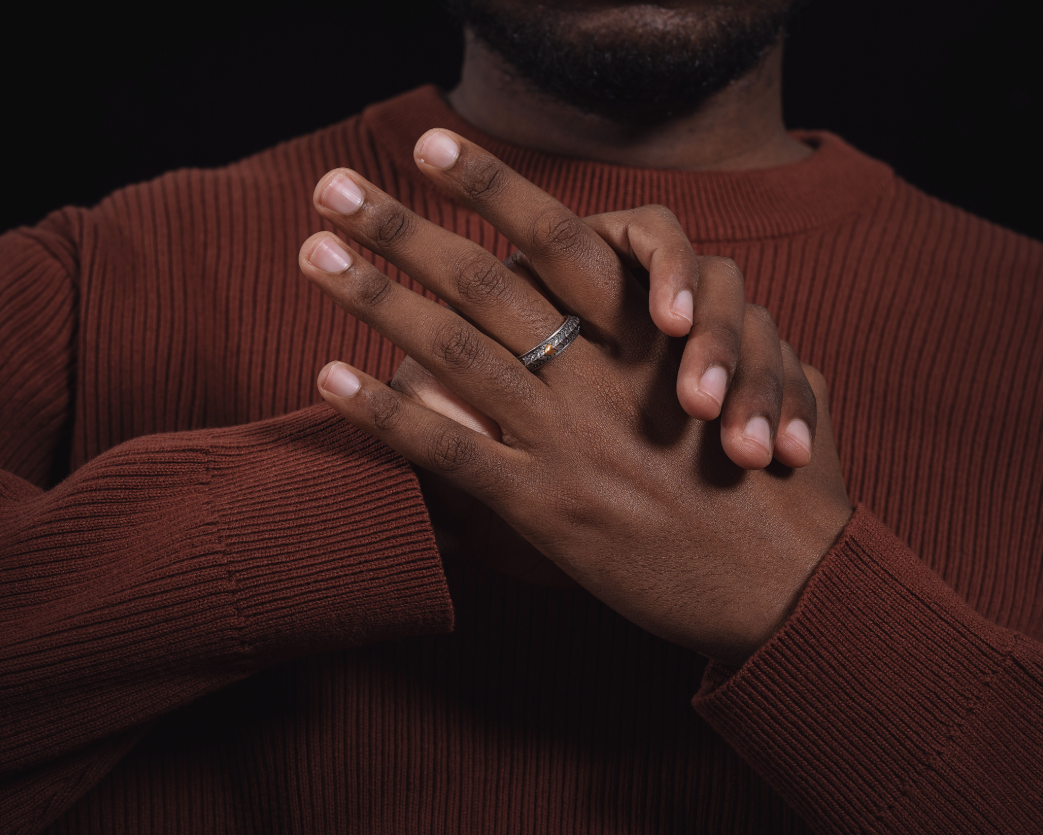
Alternative wedding ring metals and what they are like to wear
Titanium, tungsten carbide, palladium and mokume gane each change how a wedding band feels on the hand, what it costs and what a jeweler can still do with it years later, when a finger needs a different size.
How titanium, tungsten, mokume gane, palladium and other metals feel on the hand, and what they need over the years
Does a wedding band have to be gold or platinum? It is a fair question, and the reasons for asking it tend to be practical. After the record gold prices of the past two years, a solid gold band costs noticeably more than it did a few years ago, some people simply prefer a darker or more unusual look, and others work with their hands and want a ring that will not bend at the first knock. The alternatives answer those needs in different ways, but each metal also changes how the ring feels on the finger and what can be done with it years later, when a knuckle has thickened or the surface has dulled. That second part is easy to overlook in a showroom, where every ring looks new.
Titanium, the ring that is easy to forget
Titanium is the metal people notice for its weight, or rather for how little it has. A titanium band sits so lightly on the finger that some wearers forget they have it on until they happen to look down. The Gemological Institute of America describes it as scratch and corrosion resistant and extremely durable, although its hardness also makes it difficult to set stones into, so most titanium rings stay plain or carry simple grooves.
Mokume gane and the look of layered metal
If titanium appeals because of how little it weighs, mokume gane appeals because of what it shows. The name means wood grain metal in Japanese, and the technique goes back to the seventeenth century, when it was first used to decorate the fittings of Japanese swords, and only later moved on to jewelry. Sheets of different metals are stacked and joined by heat and pressure, without any solder, then forged, cut and twisted until the layers surface as rippling lines that look like the grain of a plank. Because no two blocks of metal fold in the same way, two rings made side by side never match exactly, a quality that suits couples who want a band nobody else wears.
On the finger, a mokume gane ring wears like the metals it contains. Layers of gold or silver pick up scratches about as easily as a plain gold band, and copper layers tend to darken with time, so the contrast between the lines can soften over the years. Some couples enjoy that slow change, while those who prefer a crisp pattern can have the surface cleaned and etched again by a jeweler.
The wish for a band nobody else wears does not always lead to an unusual metal, though, and many couples get there with a custom design in gold or palladium instead, such as an off-center groove, a band shaped to sit snugly against an engagement ring or a profile drawn from scratch. Pieces like these now often begin as a 3D model on a computer screen, which the jeweler can show as a realistic image before the ring is printed in castable wax or resin and cast in metal. Designing jewelry this way has become a skill of its own, and jewelry schools now teach it as one. Students at the Accademia delle Arti Orafe, for example, learn it in a 3D jewelry design course in Rome, building models in Rhinoceros and MatrixGold, from simple shapes to complex forms.
Heavier choices, from tungsten to palladium
Tungsten carbide is the opposite of titanium. It is heavy enough to feel substantial, and its polish lasts because very little can scratch it. The price of that toughness is rigidity, since the GIA notes that tungsten carbide cannot be soldered, welded or sized, and a hard knock against stone can crack a band that gold would only have dented.
For couples who like the white color of platinum but would rather wear something lighter, palladium is the option that stays among the precious metals. It belongs to the platinum group of metals and is white all the way through, so it does not need the rhodium plating that white gold receives, and it weighs noticeably less than platinum on the hand. Being a precious metal, it can be sized, engraved and set with stones by a jeweler who works with it, although not every workshop does.
Stainless steel and cobalt sit at the more affordable end. Steel is hard and resists tarnish, yet the GIA points out that it is rigid and hard to size, and that people with a nickel sensitivity may want to avoid alloys that contain nickel. Cobalt alloys are bright white and so hard that, according to the same source, designers cut them with diamond-tipped tools. Both suit someone who wants a sturdy band at a modest cost and accepts that a change of size may mean a new ring.
Resizing and care, the questions to ask before buying
Fingers change over the decades with weight, pregnancy and age, and they swell a little in hot weather too, so resizing matters more than it seems on the day of purchase. Gold, platinum and palladium can be cut and rejoined at the bench, whereas titanium, steel and cobalt range from difficult to impossible to adjust, and tungsten carbide cannot be sized at all. When buying a hard metal band, then, it is sensible to check whether the seller offers an exchange for a different size and on what terms.
Mokume gane sits somewhere in between. A band can usually be adjusted slightly, but stretching the metal also stretches the pattern, which is why makers tend to recommend getting the size right the first time.
Day to day, the hard metals need little more than mild soap and warm water, while the softer ones gather fine scratches that a jeweler can polish away. The habit that protects every ring is taking it off for the gym, for gardening and for cleaning with household chemicals, which also happen to be the moments when a tungsten band is most likely to meet a tiled floor.
Frequently Asked Questions (FAQ)
Is titanium or tungsten carbide the better choice for a wedding band?
It depends mostly on how the ring should feel. Titanium is very light and suits people who dislike the sensation of wearing jewelry, while tungsten carbide is heavier and keeps its shine longer. Tungsten carbide cannot be resized, so for anyone whose ring size might change, titanium leaves slightly more room, although it is also difficult to adjust.
How should a mokume gane wedding ring be cleaned at home?
Warm water, a drop of mild soap and a soft toothbrush are enough for regular cleaning. Liquid jewelry dips and abrasive polishing cloths can wear down the etched relief and lighten the darker layers, so they are best avoided. When the pattern looks flat, a jeweler can clean the surface and etch it again.
Is it true that white wedding rings turn yellow over time?
It is true for white gold, which is usually plated with rhodium. As the plating wears away, the warmer color of the gold alloy underneath can start to show, and the ring needs replating every so often. Platinum and palladium are white throughout, so they do not change color in the same way.